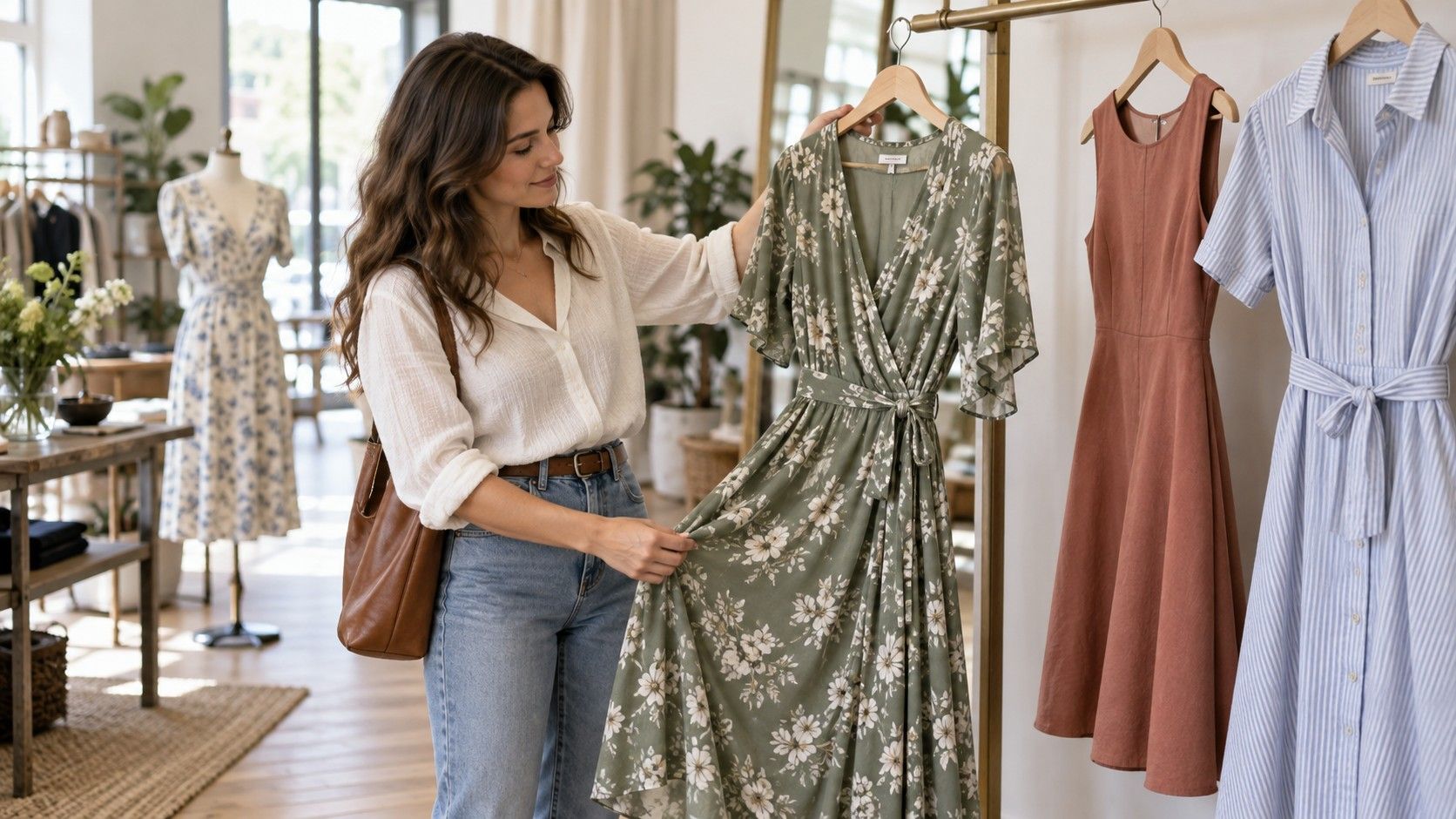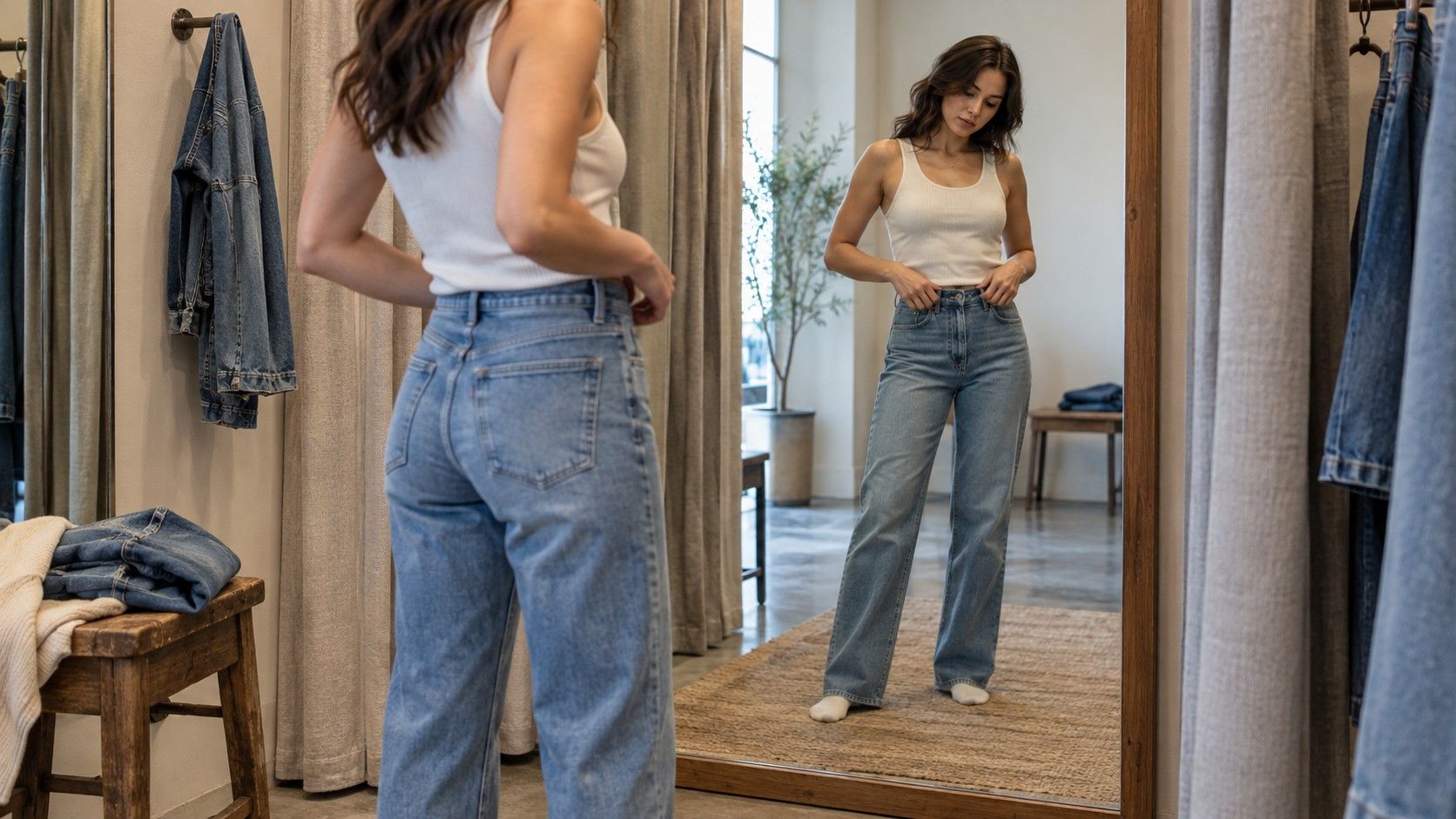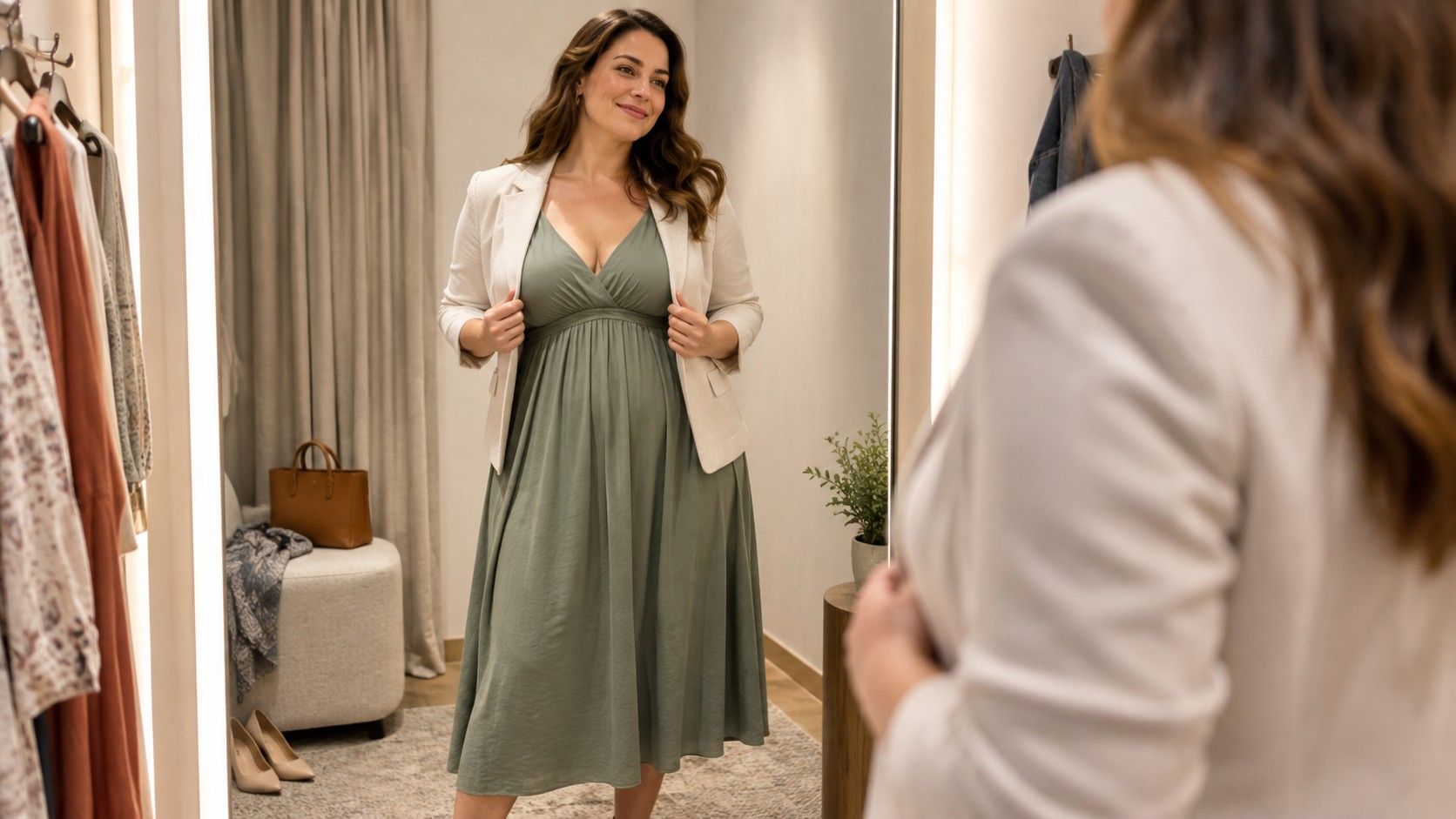
The apple body shape is often described as having a fuller midsection with a softer waist definition, while the shoulders, bust, and legs may feel like the features that set the proportions. That description is only a starting point, not a dress code. The useful question is simpler: which clothes let you sit, reach, eat lunch, and move through a full day without feeling squeezed, hidden, or strangely over-styled?
What the apple label usually describes, and what it does not
Most people who identify with an apple body shape notice that fitted waistbands and very clingy jersey draw their attention to the middle first. Their shoulders can be broad or rounded, the bust may be fuller, and their legs often feel like an easy part of an outfit to show. None of that means every measurement falls into a neat formula. Two people can wear the same size and both call themselves apple-shaped for completely different reasons.
Try a small wardrobe test before buying into the label. Put on your usual straight-leg jeans and a plain T-shirt, then take one photo from the front and one from the side. Does the hem ride up at the front? Does the fabric stick at the stomach while hanging loose elsewhere? Those clues are more useful than trying to force your shoulders, bust, waist, and hips into a category. Clothes need to work with the body you have on an ordinary Tuesday, not a diagram.
A common mistake is treating "balance" as a polite way to say "make yourself look smaller." It is not. Balance can mean giving the eye a clear line to follow, making room where you want room, or choosing trousers that make you feel sharp. If a fitted dress makes you feel excellent, it belongs in your wardrobe whether a style chart approves it or not.
Use ease and structure together around the midsection
The most dependable apple body shape clothes tend to pair a little ease with a little shape. A top that is oversized from shoulder to hem can feel bulky; one that is tightly ribbed can pull in every direction. A softly draped blouse, a knit with a clean shoulder seam, or a shirt that skims rather than grips often lands in the useful middle ground.
Look first at the shoulder line. A seam that sits where your shoulder actually ends gives a blouse or jacket an intentional frame, even when the rest of the garment is relaxed. Then check the fabric at the midsection. Stand still, raise your arms, sit down, and take a deep breath. If buttons strain, a wrap top opens too far, or the hem creeps upward, the problem is the garment's cut, not your body.
Vertical details help because they create continuity rather than a hard stop across the torso. An open cardigan, a longline blazer, a shirt placket, or a V-neck can do that quietly. You do not need a plunging neckline or a jacket that reaches the knee. Even a short unbuttoned overshirt can create a vertical line when the layers underneath are similar in depth of colour.
| Garment detail | Worth trying | Fitting-room check |
|---|---|---|
| Top hem | A hem that falls below the fullest point of the stomach or ends cleanly above it | Watch whether it rolls or catches when you sit |
| Neckline | V-necks, open collars, soft scoops, or a simple crew neck with an open layer | Make sure the neckline stays in place when you bend |
| Fabric | Matte jersey with weight, poplin, crepe, fine knits, and soft woven fabrics | Check for cling under bright changing-room lights |
| Waist detail | Gentle gathers, a raised seam, or a tie you can adjust | Loosen it one notch and see whether the silhouette still works |
There is no need to ban belts. A belt worn at the natural waist may feel perfect, while one placed a little higher can work better with a dress or cardigan. The point is control. Adjustable ties, half-tucks, and open layers let you decide where the outfit has shape instead of relying on a rigid waistband to do the job.
Dresses that do not pull, cling, or need constant adjustment
Dress shopping gets frustrating when the bust fits but the waist feels tight, or the waist fits and the shoulder area collapses. Start with movement rather than the mirror. Walk to the end of the fitting room, sit on the bench, lift your arms as if reaching for a train strap, then look again. A dress that only works with your arms at your sides is going to annoy you before the first coffee break.
Wrap dresses can be lovely on an apple body shape, particularly when the wrap has enough fabric to stay closed and the tie sits where it feels comfortable. The flimsy versions are less forgiving: they can pull across the bust and expose more than intended when you sit. A faux wrap with a sewn inner panel gives a similar line without the negotiation.
An empire waist is another option, but it is not automatically flattering just because a chart says so. The seam needs to sit under the bust without cutting into it, and the skirt needs enough drape to move away from the body. A very gathered empire dress can add more volume than you want. A smoother A-line or a column dress with an open jacket often feels calmer and more modern.
Pay attention to where prints break. A tiny all-over print can be easy to wear, while a large high-contrast motif placed at the midsection may be distracting if you dislike that effect. This is a preference, not a rule. If you love the print, wear it. If you are unsure, photograph it from a normal distance rather than judging from six inches away in a changing-room mirror.
Choose tops and jackets by how they move through the day
A good top for an apple body shape does not have to be tunic-length. In fact, very long, shapeless tops can make trousers and skirts disappear. Try lengths deliberately: one that ends just below the hip bone, one that covers the fullest part of the hip, and one that layers under a cropped jacket. The right choice depends on the rise of your bottoms and how much definition you want.
Shirts are often better with a little room through the bust and a fabric that does not buckle between buttons. A soft cotton poplin shirt worn partly open over a fitted tank gives structure without feeling stiff. If you prefer knitwear, look for a smooth gauge rather than a bulky cable pattern across the front. A side slit can make a longer knit easier to wear with jeans because it prevents the hem from pulling straight across the middle.
For outerwear, open fronts are useful but not compulsory. A single-breasted blazer with gentle shoulder shape can look polished over a tee and straight trousers. Check the button placement before you decide: if it hits at the widest point of your torso and pulls, wear it open or choose a different cut. A cropped denim jacket can also work when it ends above the waist of a dress, creating a clear proportion instead of cutting across the stomach.
Beware the urge to size up automatically. Extra room in the midsection may come with sleeves that drop too low and shoulders that lose their shape. A better alteration is often simple: buy the size that fits your shoulders and bust, then have a tailor adjust the side seams if the fabric allows it. That is especially worthwhile for a blazer or coat you will wear for several seasons.
Build outfits from the bottom up when your legs are a favourite feature
Many people with an apple body shape enjoy trousers, jeans, or skirts that give their legs a clean line. Straight-leg and bootcut jeans are easy starting points because they hold their own against a fuller top half without feeling theatrical. Wide-leg trousers can be excellent too, especially in a fabric with some weight, but check the front pleats. Deep pleats that open across the stomach may be more fuss than they are worth.
High rise is not a universal answer. Some people like the security of it; others find that a very high waistband digs in when seated. Try a mid-to-high rise with a wide, smooth waistband and spend five minutes sitting in it. If the waistband folds over or presses into your ribs, leave it behind. Comfort is not a lesser version of style.
A shorter skirt with opaque tights and boots, a knee-length pencil skirt with a relaxed knit, or a flowing midi with a tucked-in tee can all work. The deciding detail is usually the top layer. A half-tuck, open shirt, or cropped cardigan changes the proportion more effectively than trying to find one magical skirt shape. Shoes matter too: a pointed flat, trainer, or boot can each shift the mood, so judge the outfit with footwear on rather than in socks.
A fitting-room checklist for clothes you will actually wear
When you are learning how to dress an apple body shape, it helps to separate a genuine fit issue from the panic of trying something unfamiliar. Bring two pairs of bottoms you already trust: perhaps straight jeans and tailored trousers. Then test new tops, dresses, and jackets against a familiar baseline. It is much easier to tell whether a blouse works when half the outfit is already settled.
Check the front, side, and back; then stop posing. Sit down, cross your arms, reach up, and see whether you would still wear the piece to dinner after a long day. Notice the practical details: whether a bra strap shows, whether a wrap neckline shifts, whether pockets pull open, and whether the fabric becomes sheer in daylight. These checks are unglamorous, but they prevent the clothes that remain unworn with their tags tucked inside.
Finally, ask one useful question: would I choose this on a day when I want to feel like myself? If the answer is yes, the label has done its job. Use body-shape guidance as a shortcut for trying silhouettes, not as a list of rules you have to obey. The strongest wardrobe is usually a small collection of cuts you know you can move in, repeat without overthinking, and enjoy seeing in the mirror.