The best jeans for body shape are usually the pair that works with your waist, seat, thighs, and ordinary movement at the same time. That sounds obvious, yet denim shopping often starts with a body-type chart and ends with a pair that only looks convincing under fitting-room lights. Use body shape as one clue, then make rise, waistband, leg shape, and fabric do the practical work. A pair that lets you sit, walk, and forget about it will outlast any trend forecast.
Ignore the size label and start with the rise
Rise is the distance from the crotch seam to the top of the waistband, and it changes the entire feeling of a jean. A high rise can create a clear waist and keep a tucked shirt in place. A mid rise often feels less restrictive when you bend or sit. A low rise lengthens the torso visually, but it needs a very secure fit through the hip to avoid sliding. Try three rises in the same general size before deciding that a style of jeans is wrong for you.
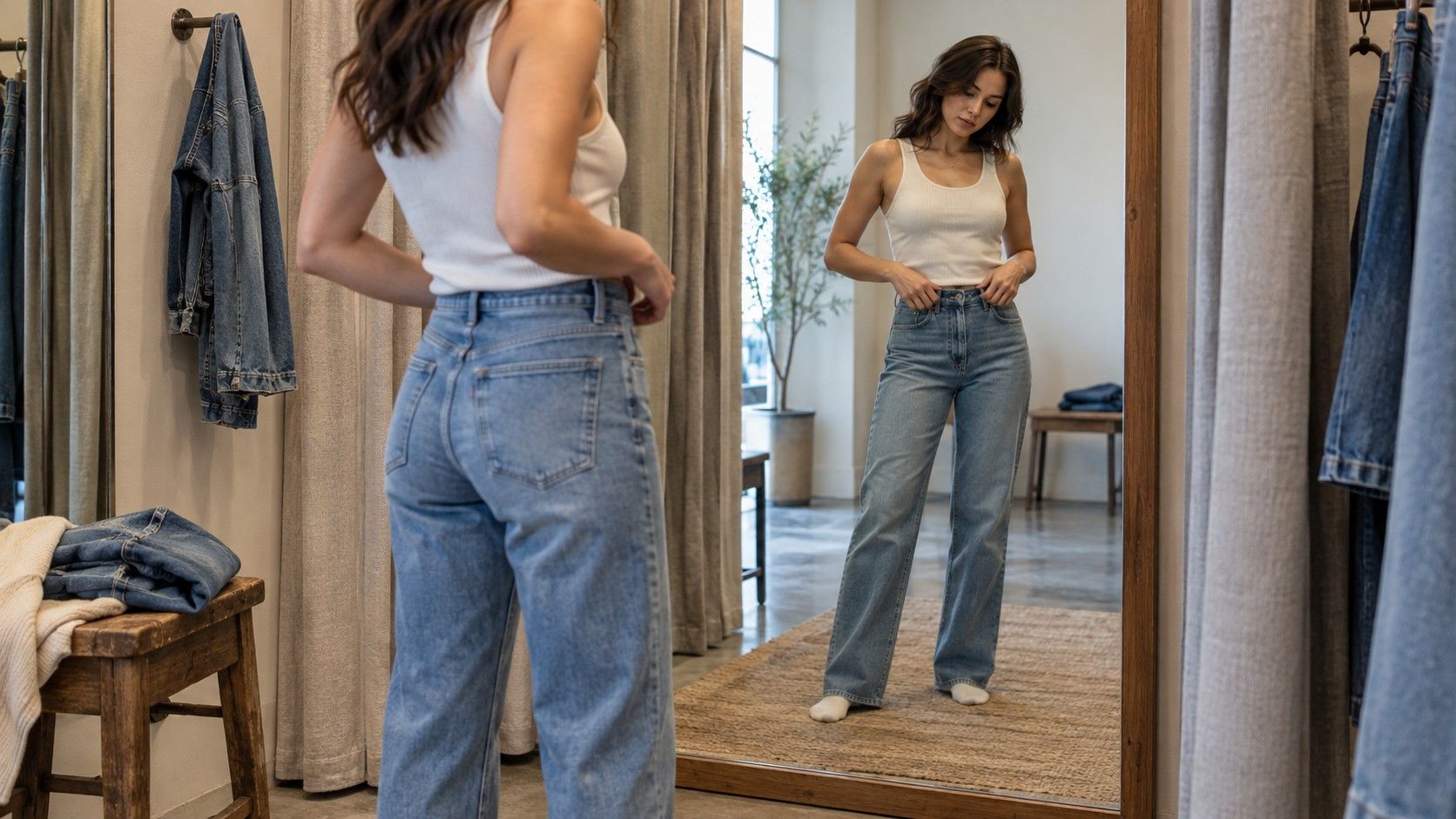
Check where the waistband lands on your actual body, not where the product photo suggests it should land. Sit on the bench, lean forward, and take a few long steps. If the front digs in while standing straight, the rise may be too short for your torso. If the back drops when you sit, it may be too low or too loose through the waist. Comfort is not a vague luxury here; it is evidence that the pattern is working with you.
Match the leg shape to the balance you want
Straight-leg jeans are a useful baseline because they do not add much width or taper aggressively. They work with cropped jackets, long coats, close-fitting knits, and oversized shirts. A wide leg creates more movement below the hip and can feel balanced with a stronger shoulder or a short top, provided the fabric hangs cleanly. Bootcut and slight flare styles add width near the hem, which can make an outfit feel grounded with boots or chunkier shoes.
None of these cuts belongs to one body type. A pear shape may enjoy a straight leg for a calm line; an hourglass body may prefer it because it clears the thigh; a rectangle shape may use a flare for extra movement; and an inverted triangle may like a relaxed leg below a simple top. The deciding point is the upper fit. If the seat pulls or the thighs feel strained, changing the leg opening will not repair the garment.
Check the waistband while sitting, not only standing
A waistband should lie against the body without pinching or gaping. Stand normally, then sit for a full minute. If you can fit several fingers in the back after sitting, the waist is probably too large even if the hips feel good. If the closure leaves a deep mark or the fly strains, do not assume the denim will solve it after a wash. Stretch denim relaxes, but it should not be asked to provide an extra size.
Waist gaping is common because many jeans are cut for one standard waist-to-hip ratio. A belt can be a good styling detail, but it should not be doing structural rescue work. When the hips and thighs fit beautifully and only the waistband gaps, a tailor can often take in the centre back more cleanly than you can by sizing down. Ask about the alteration before removing tags, especially if the jeans have a curved yoke or detailed back pockets.
| Feature | What to look for | Real-life test |
|---|---|---|
| High rise | Waistband reaches your natural waist comfortably | Sit and bend without pressure at the stomach |
| Straight leg | Fabric falls without gripping the calf | Walk up a step and check the knee area |
| Wide leg | Enough room at thigh and hem for a clean drape | Try it with your usual shoes |
| Stretch denim | Recovery after movement, not just softness | Squat once and see if the knees bag out |
Use pockets and wash as finishing details
Back pockets affect how the seat reads, but they should never override fit. Pockets placed close together can draw the eye toward the centre; wider pockets can make the back look broader. Their height matters too: pockets set unusually low may make the seat appear lower, while pockets that sit high can shorten the visual distance to the waist. Look in a full-length mirror from the back and side rather than relying on a close-up selfie.
Wash changes the mood more than the fit. A dark indigo pair often looks more polished and can move from office to dinner easily. A mid-blue wash is forgiving for daily wear. Fading at the thighs and whiskering create contrast, which may be exactly what you like or may feel busy with an already detailed top. Treat wash as a styling choice. The denim should still feel comfortable after you have considered the colour.
Give the hem and fabric a proper trial
Inseam is easy to overlook until a good pair spends its life folded at the ankle. Bring the shoes you wear most often, or at least approximate their heel height. Straight jeans can break lightly on a sneaker; wide legs generally need to clear the floor; bootcut hems need enough length to skim over footwear without dragging. Hemming is usually straightforward, but original-hem services preserve the factory finish better on casual denim.
Read the fabric label, then feel the cloth. Rigid or mostly cotton denim can loosen with wear and often moulds to the body over time, but it may need a little patience at first. Higher-stretch denim is immediately comfortable yet can lose shape if it is too thin. A useful middle ground is denim with enough structure to hold the leg line and enough give to sit comfortably. Test both knees and the seat after a short walk around the shop.
Build a small jeans rotation instead of chasing one perfect pair
Most wardrobes work better with two or three reliable jeans than with one mythical universal pair. A dark straight or slim-straight pair handles cleaner outfits. A relaxed blue pair makes casual tops easier. A wide leg, flare, or cropped pair can give you a different proportion when you want it. Each pair should earn its place by fitting the waist and allowing normal movement, not because it fulfils a body-shape rule.
When you find a promising fit, wear it at home for an hour before committing if the retailer allows it. Sit at a table, climb stairs, and see whether you keep pulling the waistband up or down. Those small irritations do not disappear because a jean photographs well. Jeans for body type are most useful when they make getting dressed less complicated, leaving room for your own taste in tops, shoes, and layers.