The best dress for body shape is rarely discovered by memorising a chart. Dresses come with their own waistlines, necklines, fabric weight, and movement, and those details decide whether one feels effortless or stays in the wardrobe. A body-type label can give you ideas to test, but it should not be a veto. Start with what the dress needs to do: move through a workday, handle a wedding lunch, feel cool in heat, or give you a little more structure than trousers and a top.
Choose by the job the dress needs to do
A dress for a long day benefits from fabric that recovers after sitting, a neckline that stays put, and a hem you can walk in. A dress for a dinner may allow more drape or a sharper waist seam because you will not be carrying bags and climbing stairs in it. Before thinking about silhouette, write down the shoes, outer layer, and setting. A beautiful floor-length column dress is a poor choice if you will spend the evening on uneven pavement; an airy shirt dress may be perfect for that same plan.
Body shape advice becomes more useful when it answers a specific question. If you want the waist to read clearly, look at wrap, fit-and-flare, and belted shirt dresses. If you want a long clean line, compare a column dress with a softly tailored slip dress. If you want freedom through the stomach and hips, an A-line or empire seam may feel easier. The goal is a comfortable visual decision, not a disguise.
Compare waistlines before comparing silhouettes
The waist seam is often more important than the name of the dress. A natural waist seam sits near the narrowest part of the torso and creates a familiar balanced effect. An empire seam sits higher and can lengthen the leg line, though it needs enough room through the bust to avoid pulling. A dropped waist gives a relaxed, straight feeling and can be excellent in a sporty or 1920s-inspired dress. Wrap dresses create definition through overlap, so their fit depends on the tie and the way the front panels stay closed.
Try the seated test before you fall for a mirror pose. Sit down, cross one leg, raise your arms, and see what happens to the waist seam. A seam that twists or rises too far is likely to irritate you later. With a belt, check whether it is attached or removable. An attached belt keeps the intended proportion; a removable belt gives more options but can slide over smooth fabric. Neither is better, but the distinction changes how often you will wear the dress.
Match fabric to the amount of structure you want
Crisp poplin, denim, and heavier cotton hold an A-line or shirt-dress shape away from the body. They are useful when you want a defined outline, but they can feel stiff in humid weather or at a seated event. Jersey and ribbed knits follow the body and are easy to layer, although thin versions may show underwear lines. Crepe, viscose, and silk-like fabrics drape more softly and can make a column or wrap shape feel less formal than its cut suggests.
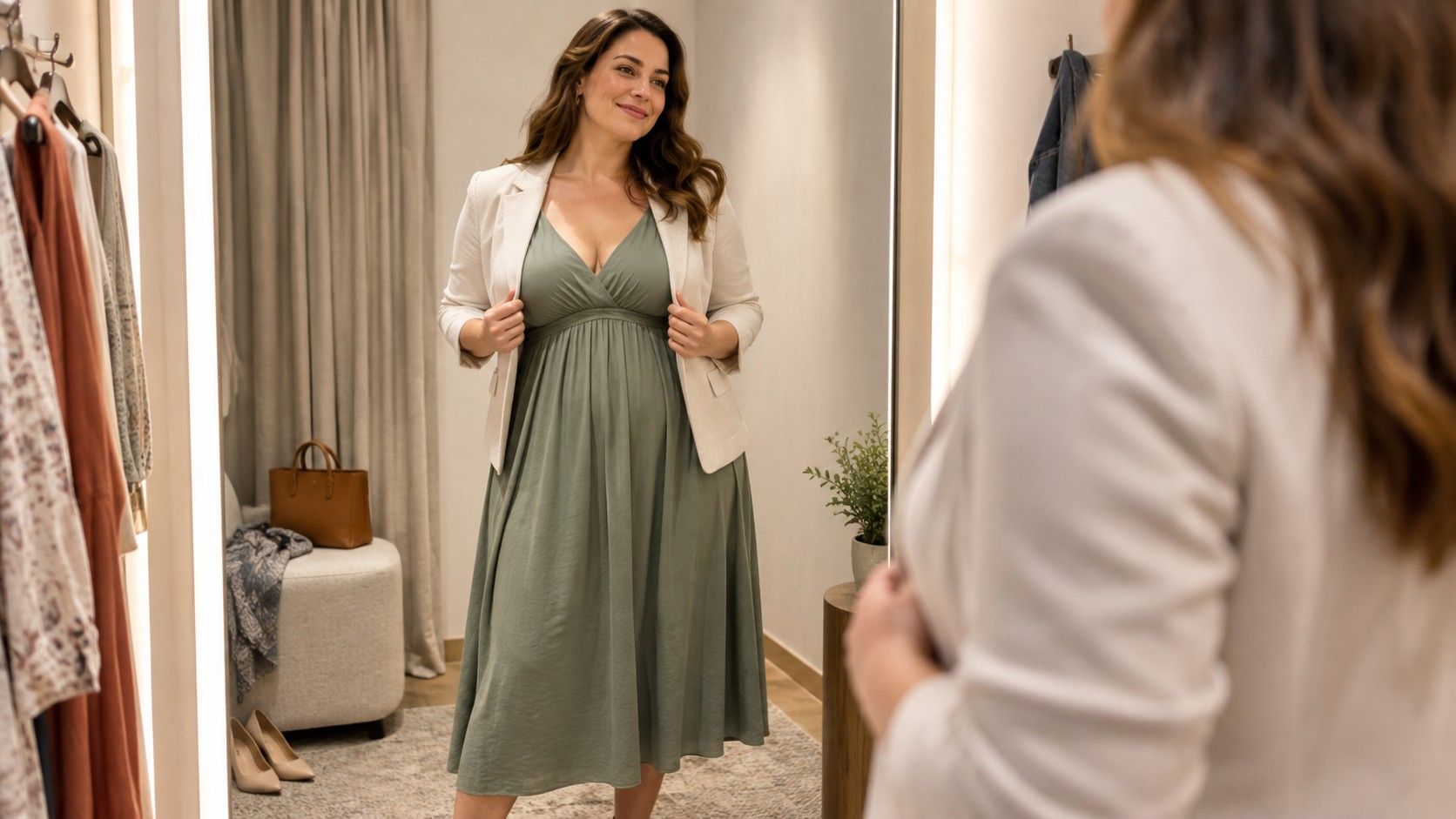
Use the changing room to watch fabric move. Twist at the waist, take a few steps, and stand near a window if possible. Some fabrics become sheer in sunlight; some cling after static builds; some wrinkle the moment you sit. These are not minor faults if they affect your day. A well-cut dress in a fabric you dislike is not a bargain. A slightly simpler shape in a fabric that feels good can become the dress you reach for repeatedly.
| Dress shape | What it offers | Best fitting check |
|---|---|---|
| Wrap dress | Adjustable waist and diagonal line | Front panels remain secure when seated |
| Shirt dress | Flexible structure and easy layering | Buttons stay flat over bust and hips |
| A-line dress | Room and movement below the waist | Skirt falls evenly from the seam |
| Column dress | A long, simple vertical silhouette | You can take a normal stride |
Four dress shapes and their trade-offs
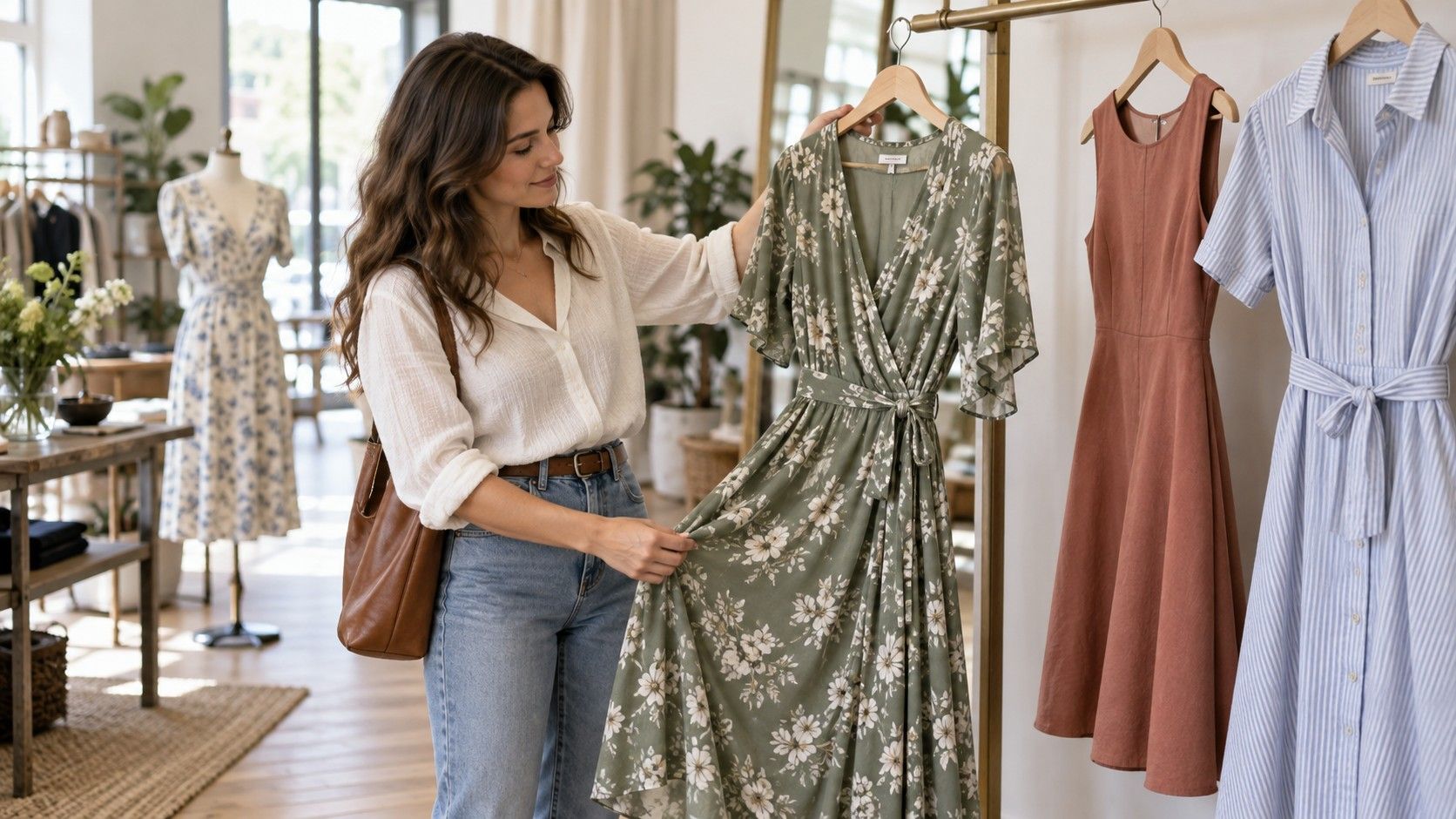
A wrap dress is adaptable but needs a stable neckline and enough overlap. A shirt dress can look polished with flats or boots, yet the fit through the bust and button placket matters more than the belt. An A-line dress offers movement and is easy to wear with different body shapes, but a very stiff skirt can feel costume-like if the rest of your style is minimal. A column dress is elegant and uncomplicated, though it must have a slit, stretch, or enough ease for walking.
These trade-offs make shopping faster. Instead of asking whether a dress is universally flattering, ask which compromise you are happy to make. Would you rather have a defined waist or a loose midsection? A firmer fabric or a fluid one? A high neckline or open space for jewellery? There is no body-type answer that can replace those choices. The dress should meet your priorities, not a generalised idea of proportion.
Use neckline, length, and sleeves as finishing choices
Once the waist and fabric work, use the neckline to steer the mood. A V-neck creates a vertical opening; a square neck gives a more graphic frame; a scoop neck is soft and easy with necklaces; a high neck can feel sleek under a coat. Sleeves change practicality as well as outline. A sleeveless dress may need a jacket for an air-conditioned room, while a loose long sleeve may make summer layering impossible.
Length deserves a shoe test. A midi that looks graceful barefoot can catch on a low boot, and a short hem can feel different once you sit down. Bring or imagine the shoes you genuinely wear, then walk a few paces. Consider your coat length too. A dress hem extending just beyond a short jacket may be deliberate; a hem caught at the same awkward point as the coat can make an otherwise good outfit feel accidental.
Test a dress in motion before deciding
The mirror test is incomplete until you move. Walk quickly, sit, reach for a shelf, and turn sideways. Notice whether you keep adjusting the neckline, waistband, or hem. A dress may be designed for your body type on paper and still fail because the armhole rubs or the fabric twists. Keep the camera in perspective as well: take a full-length photo from a few steps away, because close mirror angles exaggerate details that disappear in real life.
Build your collection around dresses that earn a second wear. One structured shirt dress, one softer wrap or bias dress, and one easy A-line or column shape can cover many situations if their fabric and fit are right. Dress shapes for body types are useful when they expand your options. They become unhelpful when they make you ignore comfort, movement, and the clothes that already make you feel like yourself.