A blazer can make an outfit feel finished, but it is also one of the quickest garments to expose an awkward fit. The useful question is not whether a jacket is the right choice for a named body type. It is whether its shoulders, length, closure and movement work with the clothes you already wear. These checks make trying on best jackets for body shape far less mysterious.
Start with the shoulder fit, before the style label
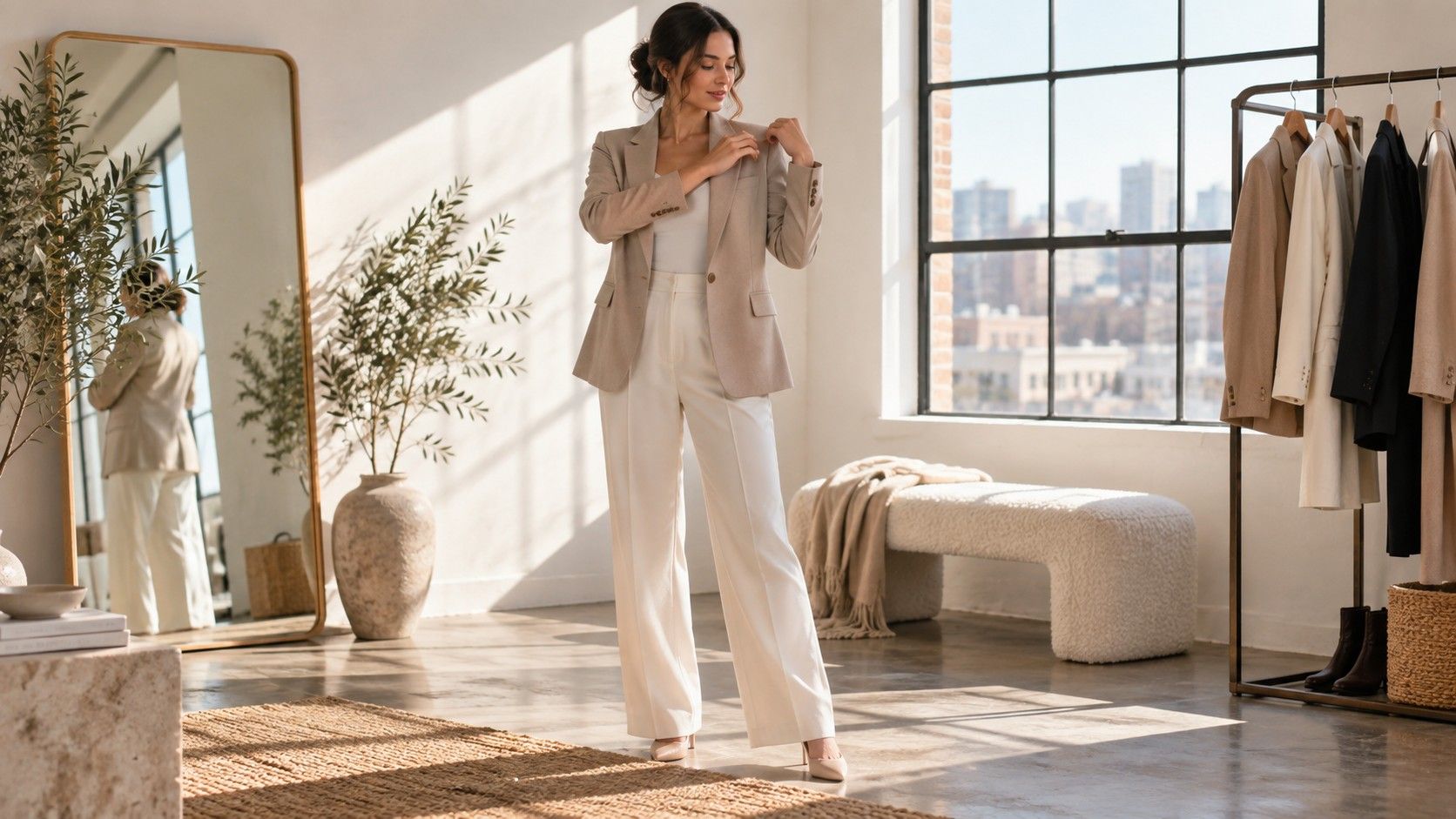
The shoulder seam is the non-negotiable starting point. It should end close to the natural edge of your shoulder, without a dent pulling inward or a padded shelf extending past it. A slightly relaxed shoulder can be intentional in an oversized jacket, yet it still needs to sit neatly when you raise an arm. If the seam is too narrow, the back often strains before you even button the jacket.
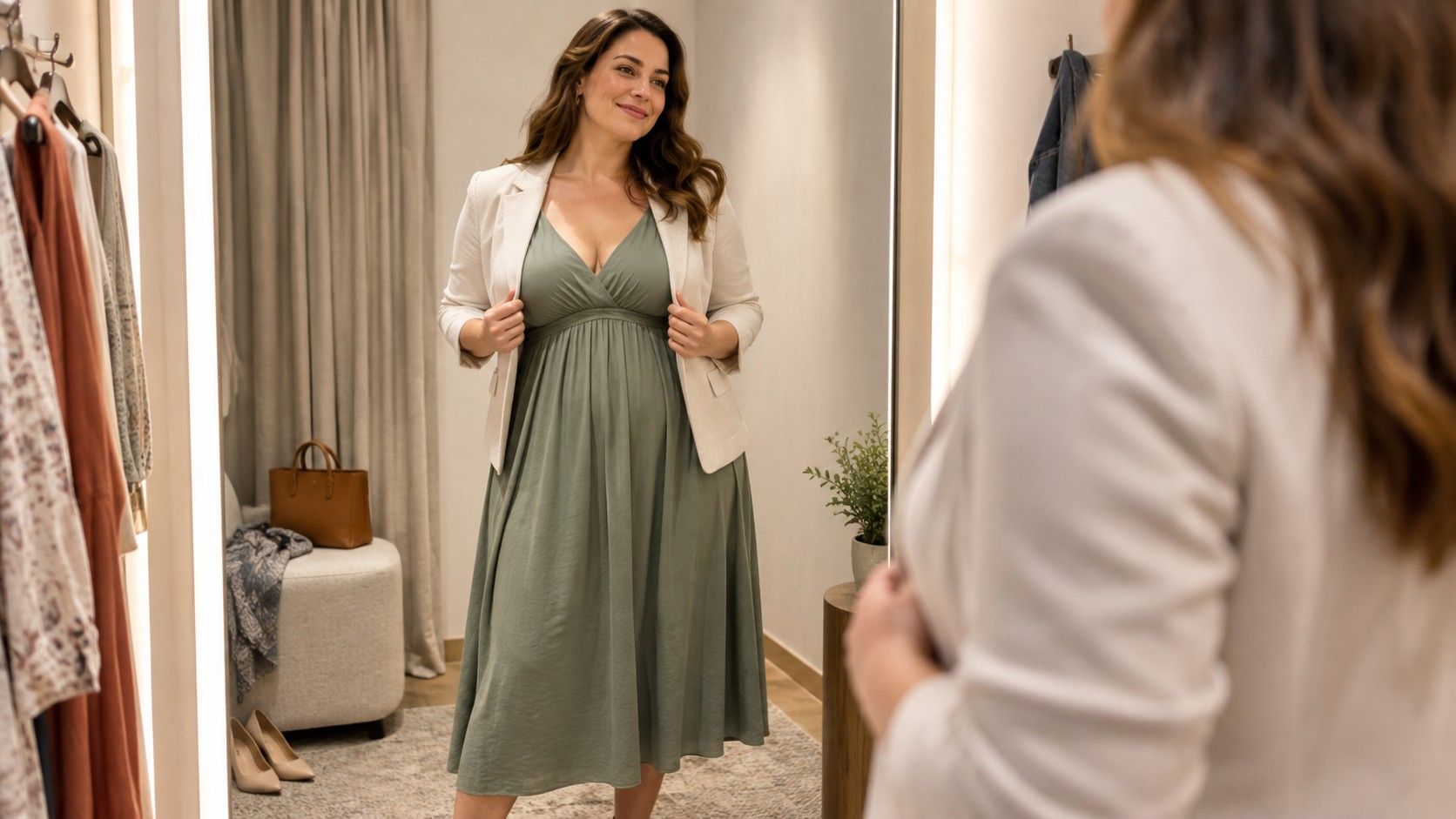
Try the blazer over the kind of top you expect to wear most often. A sleeveless fitting-room test can make a close armhole seem fine, then a knit underneath turns it restrictive. Look at the upper back in a mirror, reach for a bag, and sit down. The goal is ease: enough room to move without a permanently loose, borrowed look.
Choose jacket length with the whole outfit in view
Hem length changes the visual division of an outfit more than a tiny change in lapel width. A cropped jacket can put emphasis near the waist and works well over a high-rise skirt or trouser. A hip-length single-breasted blazer is often the most flexible everyday option because it layers over jeans, dresses and tailored trousers without demanding a precise match.
Longline styles can feel polished, especially with a straight trouser, but inspect where the hem lands from the side. A hem that stops at the widest point of a hip is not automatically wrong; it simply creates a stronger horizontal line. If that line feels abrupt, test a few centimetres longer, an open front, or a lower-contrast top and jacket. Clothing does not need to disguise a body to look considered.
| Fit area | Quick check | What to adjust |
|---|---|---|
| Shoulders | Seam ends near shoulder edge | Change size or try a different cut |
| Chest | Front lies flat when buttoned | Look for more ease or a lower button stance |
| Waist | Shaping follows rather than grips | Try straighter tailoring or wear it open |
| Hem | Works with your usual rise and shoes | Compare cropped, hip and longline lengths |
| Sleeves | Wrist remains free when arms bend | Alter length; do not size up only for sleeves |
Use button stance and lapels to direct the eye
The button stance is where a jacket closes. On a single-breasted blazer, a button around the natural waist creates a clear centre; a lower stance lengthens the open V above it. Neither is universally better. Try the jacket buttoned once, then open, because many people wear blazers both ways during the same week.
Lapels also have a quiet effect. Narrow lapels read clean and compact, while wider lapels add a little presence around the chest and shoulders. What matters is scale: a very delicate lapel can disappear under a broad scarf, and a wide one can compete with a busy blouse. If you are comparing a blazer for body type, compare it with the same trousers and shoes so the lapel is not judged in isolation.
Check movement before deciding that it fits
Stand, sit, reach forward, cross your arms and put your hands in pockets. A jacket that looks sharp for ten seconds but catches across the back or rides up at the neck will stay in the wardrobe. Notice whether the front pulls into an X when buttoned. A little tension in a fitted style is normal; deep diagonal lines usually mean the chest, waist or back needs more room.
Sleeve length is easier to alter than shoulder width. Ideally, the sleeve ends around the wrist bone and does not climb halfway up the forearm when you bend your elbow. Check the lining too: a sleeve that twists can make a well-cut jacket feel oddly tiring. Comfort is a fit criterion, not an afterthought.
Three reliable jacket outfit formulas
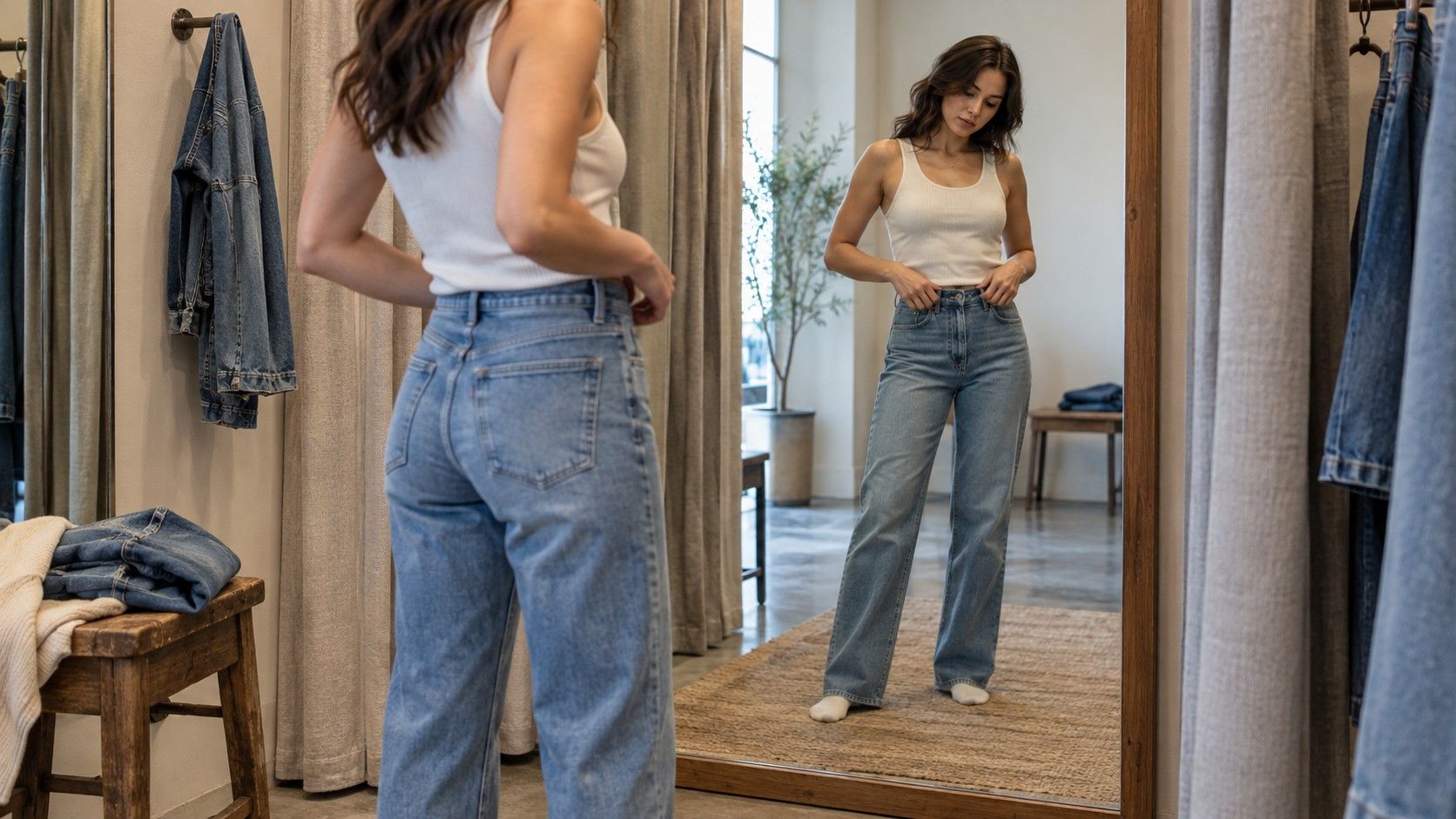
For a straightforward weekday outfit, pair a hip-length blazer with a simple top, straight-leg jeans and a shoe that shows some ankle or has a defined toe. The vertical opening of the blazer keeps the pieces from becoming one solid block. For a cropped jacket, use a high-rise bottom and let the top meet the waistband rather than bunch beneath it.
For a dress, choose the jacket length deliberately: a shorter jacket can clarify the waistline, while a longer relaxed blazer creates a column over a slimmer dress. Finally, when trousers and blazer are similar in colour, vary texture with denim, knitwear or a soft tee. These formulas are starting points, not rules. The best final test is simple: can you move, can you see the intended line, and would you reach for the outfit on an ordinary day?
Know when to size, alter or leave it behind
A common trap is buying a blazer that is almost right because the colour or price is tempting. Separate fixable details from structural ones. A tailor can usually shorten sleeves, adjust a simple hem or take in some waist fullness. They cannot reliably add room across a narrow shoulder, move an armhole without changing the jacket, or make a tight upper back comfortable. Ask the shop whether the garment has seam allowance before planning alterations.
Try two nearby sizes if the jacket is close. The larger size may give useful chest and back ease, while the smaller one may have a cleaner shoulder. Choose the version with the better shoulder and movement, then consider small alterations. If neither passes the sit-and-reach test, change the cut rather than forcing it. A relaxed blazer, a softer unlined jacket or a different button stance may suit the same outfit much better.
Photographs help when you are comparing several options. Take front, side and back photos with the jacket open and buttoned, then look again later. You will see if the hem is twisting, the collar is lifting, or the sleeves are noticeably long. More importantly, notice which jacket makes you stand naturally. That quiet ease is usually a stronger signal than any body-shape rule.
A final fitting pass helps turn an idea into a dependable choice. Wear the combination for twenty minutes at home, sit down, walk upstairs and carry your usual bag. Notice the small details: a hem that catches, a sleeve that rides up, or a layer that feels warmer than expected. Then keep the adjustment that makes the outfit easier to wear, rather than the one that merely looks right for a moment.