Outfit proportion is the relationship between lengths, widths, colour blocks and layers. It is not a rulebook for making every body look alike. A useful check helps you notice why an outfit feels slightly unfinished, then gives you one small adjustment to try. The best body shape outfit ideas make room for taste, weather, movement and the reality of your day.
Start with the occasion and comfort
Before looking at the mirror, decide what the outfit needs to do. A commuting outfit needs different shoes and layers from a dinner outfit; a day spent sitting needs a waistband that does not dig in. Comfort changes proportion because clothes that need constant pulling soon lose their intended line. Begin with the item you most need to wear, then build around it.
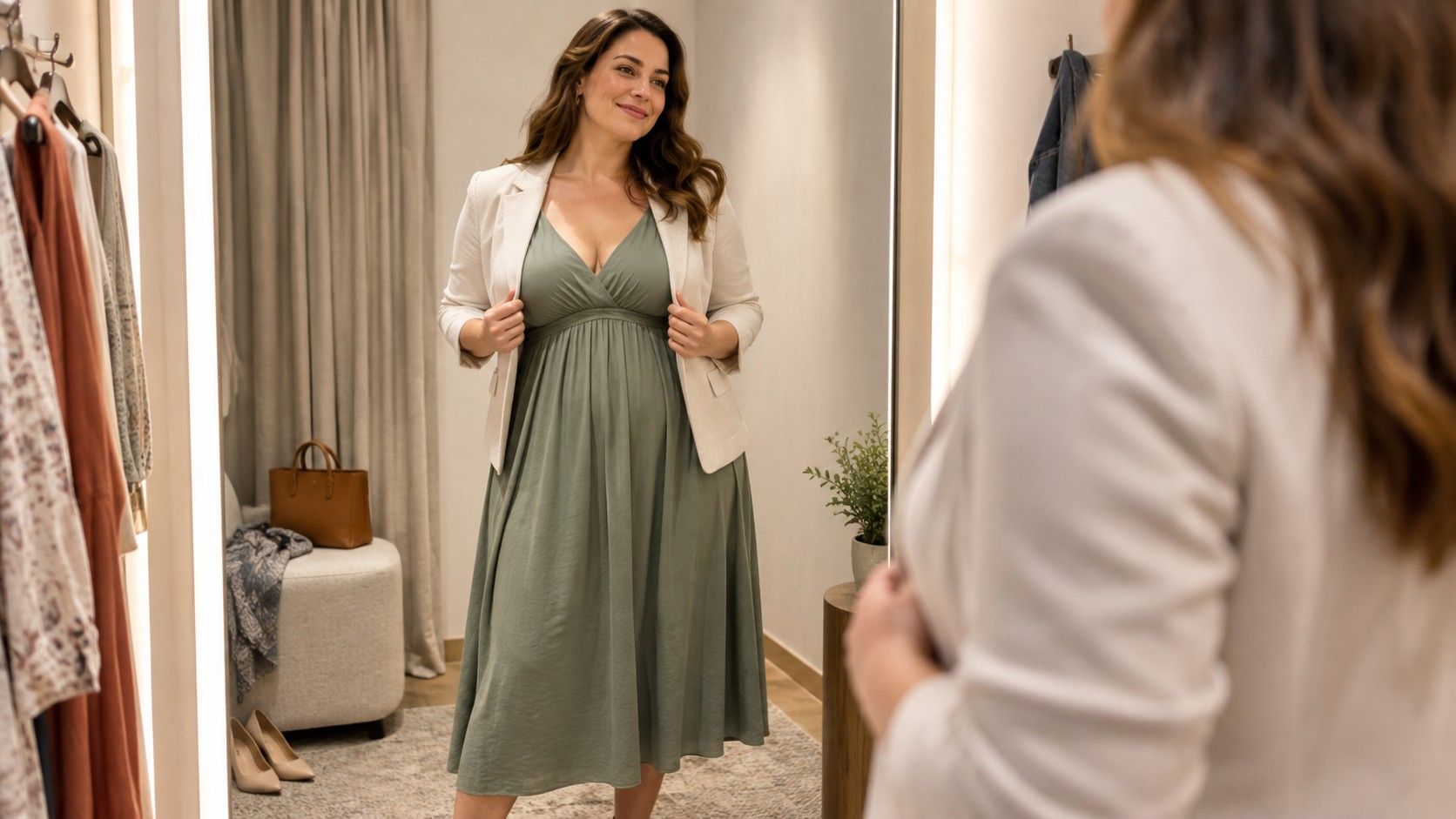
Put the full outfit on, including socks, shoes and coat if they will be part of the day. A hem that looks right barefoot can feel too short with boots. A structured jacket can change the balance of a soft dress. This first stage prevents the common mistake of judging a top and trousers before the pieces that frame them are present.
Check the top-to-bottom proportion
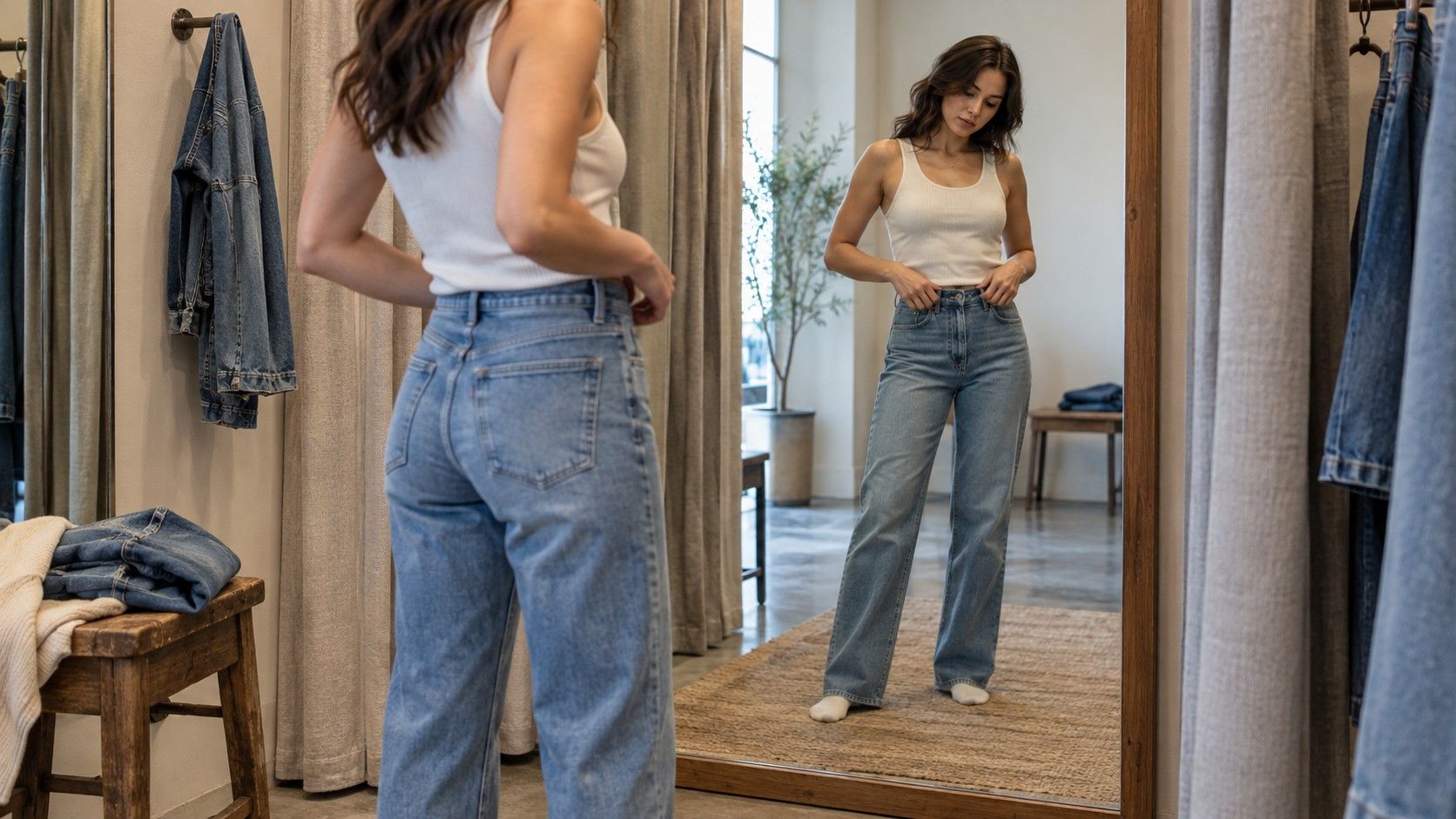
Look for the visual split created by a waistband, tuck or hemline. A full tuck can make the leg line read longer; a half tuck can soften that division; an untucked top creates a different, more relaxed column. None is automatically better. Compare them with the same shoes and take a step back from the mirror rather than examining only your waist at close range.
Hemlines matter too. A cropped cardigan over high-rise trousers creates a clear short-over-long ratio. A longer shirt with narrow trousers can form a vertical line, while a long top over a wide bottom may need an open layer or more contrast to avoid feeling visually heavy. The point is not to correct proportions; it is to choose the line you prefer on that day.
| Mirror check | What to notice | Small adjustment to test |
|---|---|---|
| Waist placement | Where the outfit appears to divide | Tuck, untuck, add a belt or change the rise |
| Hemline | Where tops and layers stop | Try a shorter layer or a longer open one |
| Scale | Whether accessories compete with the outfit | Change bag, shoe or jewellery size |
| Contrast | Where colour blocks draw attention | Move the stronger colour to a different piece |
| Movement | Whether the silhouette survives walking and sitting | Choose more ease or a less fussy layer |
Decide where the visual focus sits
Every outfit has areas of contrast: a light top against dark trousers, a bright shoe, a patterned scarf or a defined waist. Choose one or two focal points rather than trying to make everything equally noticeable. If a bold jacket, striking neckline and statement boots all compete, the outfit can feel busy even when each piece is good on its own.
Use contrast intentionally. A similar-colour top and bottom create a longer uninterrupted column, while a high-contrast belt makes the waistline obvious. Accessories can shift focus without changing the clothes: a small bag near the hip, a pendant at the chest or a patterned shoe all guide the eye. Ask whether that emphasis feels enjoyable, not whether it meets a universal ideal.
Use layers without losing the shape you want
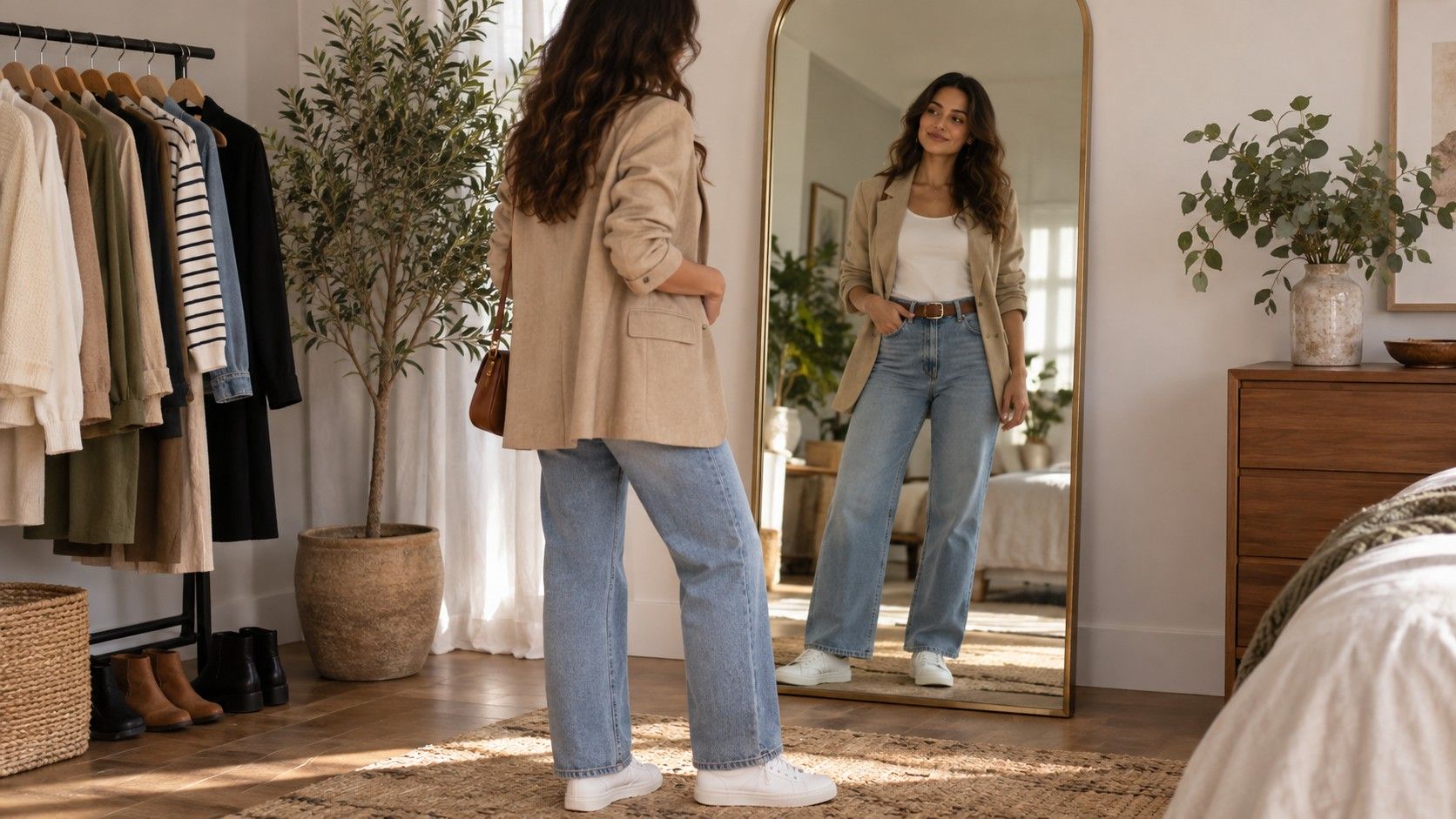
Layers can add warmth and depth, but each one adds another hemline and edge. Start with the outermost layer: does it end above, at or below the hem of the piece underneath? A cropped jacket can define the waist over a dress; a longer cardigan can create a relaxed vertical frame. If the layers bunch at the shoulders or all end at the same place, try removing one or changing its length.
Fabric weight matters as much as length. A thick overshirt over a chunky knit may feel bulky regardless of body shape, while a thin open shirt over a tee is easy to adjust. Check your side view and your back view. An outfit is not only a front-facing mirror picture.
Five questions before you leave
First, can you sit, walk and reach without rearranging the outfit? Second, does the waist placement feel deliberate, even if the answer is “no defined waist today”? Third, do the shoe and hem work together? Fourth, is there one focal point you enjoy? Fifth, would you still wear this if you had no time to take another photo?
This outfit proportion checklist is meant to shorten decisions, not create them. If an outfit passes the movement test and feels like you, it is balanced enough. Keep notes on the combinations that work, because your own repeated successes are more valuable than a generic list of rules about what a body shape should wear.
Use photos and repetition as your private reference
A mirror check is useful, but a quick photo can reveal how an outfit reads at normal distance. Take one in daylight from chest height, without posing or smoothing every wrinkle. Compare only outfits serving the same purpose: a working-day outfit should not be judged by the standards of an evening look. Delete the photos if you do not want to keep them; the observation is what matters.
When an outfit works, record the formula in a note: cropped cardigan with high-rise straight jeans, or long open shirt with a fitted tank and wide trousers. Add the shoe and outer layer. Soon you will have a personal library of body shape outfit ideas based on clothes that already survived a real day, rather than an abstract image online.
Repetition is a strength. Wearing a successful silhouette again lets you notice small changes in scale and contrast without rebuilding the whole outfit. Swap one element at a time: a shorter jacket, a different belt, or a bag with less visual weight. That is how to balance outfit proportions without turning every morning into a styling project.
A final fitting pass helps turn an idea into a dependable choice. Wear the combination for twenty minutes at home, sit down, walk upstairs and carry your usual bag. Notice the small details: a hem that catches, a sleeve that rides up, or a layer that feels warmer than expected. Then keep the adjustment that makes the outfit easier to wear, rather than the one that merely looks right for a moment.