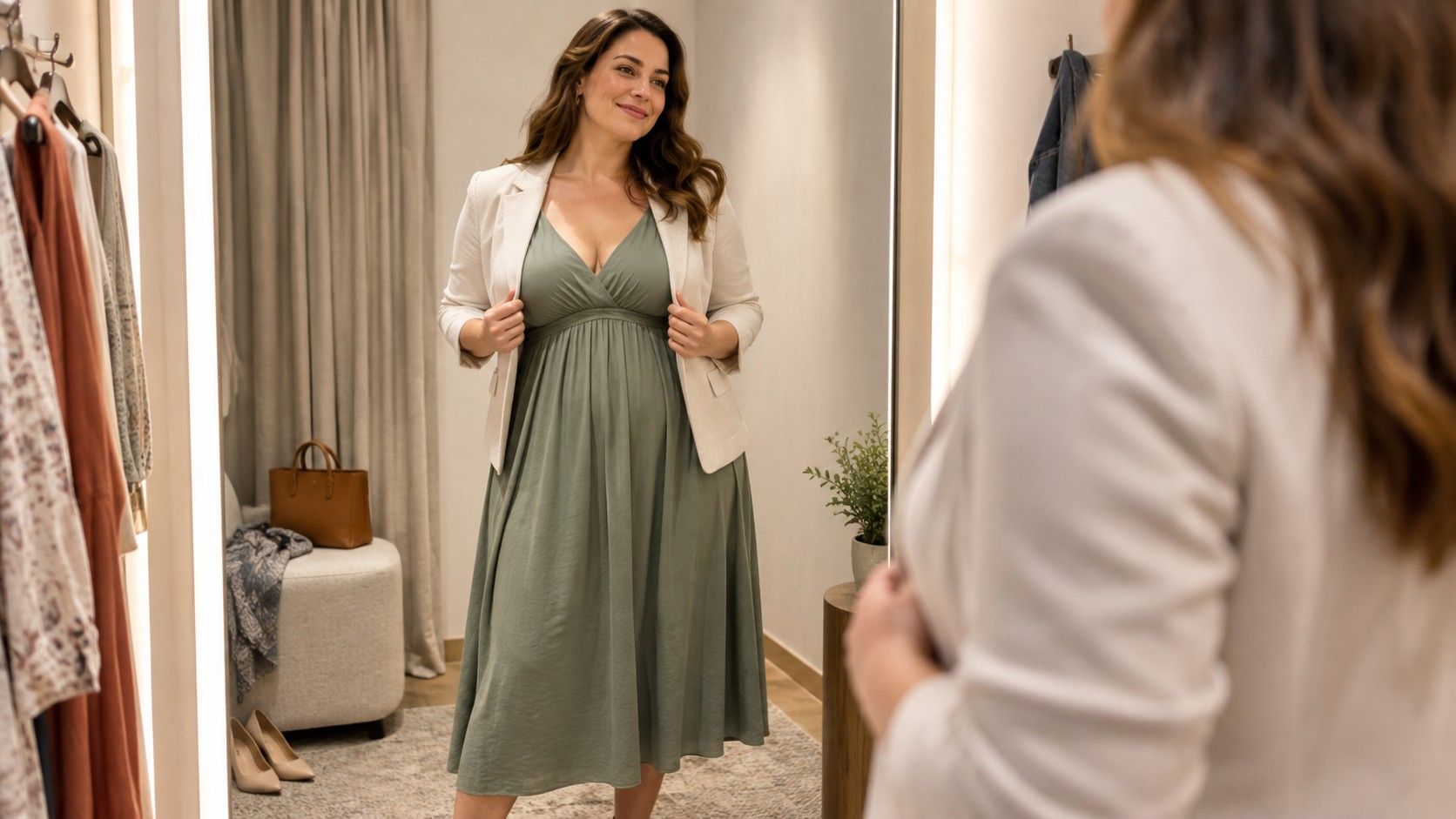
The terms body shape and body type are often used as if they mean the same thing. In everyday clothing advice, they usually overlap, but the distinction can prevent a lot of unnecessary confusion. Neither term is a diagnosis or a ranking. They are loose ways to discuss proportion, fit and the clothing lines a person may want to test.
Why the terms get mixed up
Body shape is common language in fashion guides. It refers to the relationship between areas such as shoulders, bust, waist and hips, often described with labels like rectangle, pear, hourglass, apple or inverted triangle. A body type may be used the same way, or it may refer more broadly to frame, build or a particular style system. That is why two articles can use different language while offering similar advice.
The practical problem appears when a label is treated as precise science. A measurement chart can suggest a category, but it cannot capture posture, muscle, breast shape, height, fabric preference or the way one person likes clothes to sit. Treat the words as search tools, not permanent identity cards.
Body shape is about relative proportions
When people ask about different body shapes, they are generally looking at relative measurements rather than a single number on a tape measure. A waist can be clearly defined in one outfit and less obvious in another. Shoulders may look broader in a structured jacket than in a soft T-shirt. Proportion is visual and contextual; it changes with the garment around it.
If you want a baseline, take bust, waist and hip measurements in light, comfortable clothing, standing normally rather than holding your breath. Record them as a snapshot, then use a few outfit photos to see how lines actually read. The point is to identify fit preferences, such as where trousers sit best or which jacket length you reach for, not to prove membership of a category.
| Term | Usually means | Useful clothing question |
|---|---|---|
| Body shape | Relative visual proportions | Which lines or garment lengths do I enjoy? |
| Body type | Broad build, frame or a style-system label | What fit details need attention first? |
| Measurements | A temporary numerical snapshot | Where do garments need room or adjustment? |
| Style system | A framework for experimenting | Does this suggestion help in real outfits? |
Why bodies do not fit neat categories
Most category drawings show clean, symmetrical outlines. Real bodies do not work that way. One shoulder can sit slightly higher, a waist can shift in definition through the month, and a familiar body shape can look different in a winter coat than in swimwear. A person may also relate to more than one category depending on whether the focus is shoulders, hips or overall silhouette.
This variation is not a failure of the person or the chart. It is a reminder to test advice in garments. If a guide says a wrap top may work for one shape, try the neckline, wrap placement and fabric. The same garment can feel secure on one person and constantly need readjusting on another. Experience outranks a label.
Use labels without turning them into limits
Labels are helpful when they offer a sensible starting comparison. A person who finds jackets tight at the shoulder may explore softer shoulders, roomier sleeves or an open front. Someone who prefers a defined waist may compare belts, seams and button stances. These are concrete experiments, not rules about what they are allowed to wear.
Be wary of advice that says an item must hide, correct or balance a body. Clothes can create emphasis, contrast and structure, but they do not need to solve a body. A bright skirt, oversized coat or square neckline can be worn because it feels expressive, even if a chart calls it “unflattering.” Comfort and confidence are meaningful data too.
A calmer way to apply style advice
Choose one question at a time. Instead of searching for the perfect body type wardrobe, ask whether you prefer a high, mid or low trouser rise; whether a cropped or hip-length layer feels better; or whether you need more shoulder ease. Photograph two options in similar light and notice which one you would wear for several hours.
Over time, those observations form a personal fit guide that is more useful than any fixed category. Body shape vs body type becomes less of a debate and more of a vocabulary choice. Use the vocabulary when it helps you find ideas, leave it behind when it does not, and let your own comfort make the final decision.
Turn a category into a useful fitting experiment
Use a label to make a small comparison, not a broad judgement. If you identify with a pear-shaped guide, compare two jacket lengths or two trouser pocket placements. If a rectangle guide suggests waist detail, test a belt, a seam or an open layer. Keep only the observation that holds up in your own wardrobe. A category is useful when it narrows a shopping experiment; it is unhelpful when it tells you that half the shop is forbidden.
Fit notes make these experiments easier to remember. Write down the rise, fabric content and size of trousers that stay comfortable; note whether a neckline gapes after an hour, or whether a blazer needs room at the upper back. These details have more practical value than a perfect answer to what is body type. They also travel well across brands, whose size charts often differ.
Language can be chosen with care. Some people find body-shape terms helpful and playful, while others prefer to talk about garment proportion, frame or fit. Both approaches are valid. The aim is a wardrobe that gives you choices, not a system that makes you scrutinise yourself every time you get dressed.
A final fitting pass helps turn an idea into a dependable choice. Wear the combination for twenty minutes at home, sit down, walk upstairs and carry your usual bag. Notice the small details: a hem that catches, a sleeve that rides up, or a layer that feels warmer than expected. Then keep the adjustment that makes the outfit easier to wear, rather than the one that merely looks right for a moment.