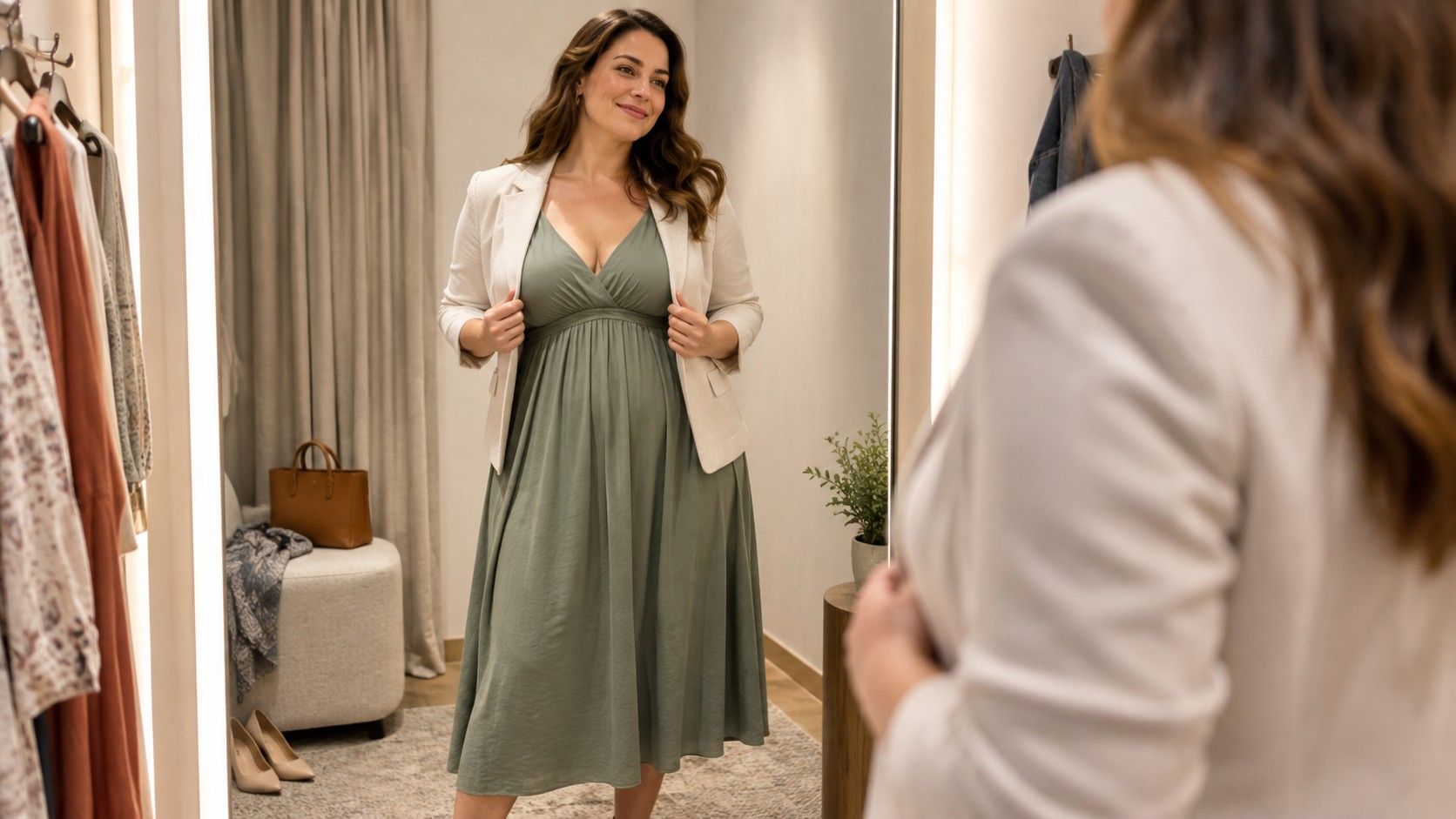
An hourglass body shape usually means the bust and hips appear fairly balanced, with a visibly smaller waist between them. That description can be useful in a fitting room, but it is not a dress code. Most of the good decisions come down to ordinary things: whether a waistband stays put after lunch, whether a jacket closes without pulling, and whether you can sit in a dress without spending the evening adjusting it. I would use the label as a shortcut for noticing proportion, then let comfort and taste make the final call.
Recognise the proportion without turning it into a rule
Many people with an hourglass proportion notice that fitted dresses look different on them than straight-cut ones, or that trousers which fit the hip leave a little room at the waist. Balanced bust and hips with a defined waist are the usual signs, but height, shoulder shape, bust fullness, and torso length still change the fitting problem. Two people can have similar measurements and need completely different jacket cuts.
Start with clothes you already wear. Put on a close-fitting top and jeans or leggings, then look at the full outline in a normal mirror. Does a waist seam land where your body naturally narrows, or does it sit too high and make the whole outfit feel cramped? Does a loose shirt feel pleasantly relaxed or simply hide the shape you like? Those answers are more helpful than trying to match yourself to a drawing. A body-shape category should make shopping less random, not make you reject clothes before trying them.
Keep the waist visible without squeezing it
For many hourglass body shape clothes ideas, the waist is the easiest point to work with. A tucked T-shirt and high-rise trousers, a cardigan that ends near the waist, or a dress with a soft tie can give an outfit some shape without turning it into a costume. The useful distinction is between definition and compression. A waistband can sit at the natural waist and still leave enough room to breathe, eat, and bend down to pick up a bag.
Fabric changes the result. A belt over a crisp cotton shirt often holds its place; the same belt over a slippery blouse may creep upward all day. A thick ribbed knit can look neat untucked, while a bulky cable knit pushed into a waistband creates more volume than most people expect. In a changing room, lift both arms and sit for a minute. If the waist seam rides toward your ribs or the belt digs in straight away, that piece is asking too much of you.
There is also no obligation to show the waist in every outfit. A long open cardigan, a relaxed shirt worn loose over straight jeans, or a shift dress can be exactly right when you want an easier line. The point is to choose the amount of definition on purpose. It feels very different from buying oversized clothes because a chart warned you away from anything straight.
Choose dresses that stay comfortable in motion
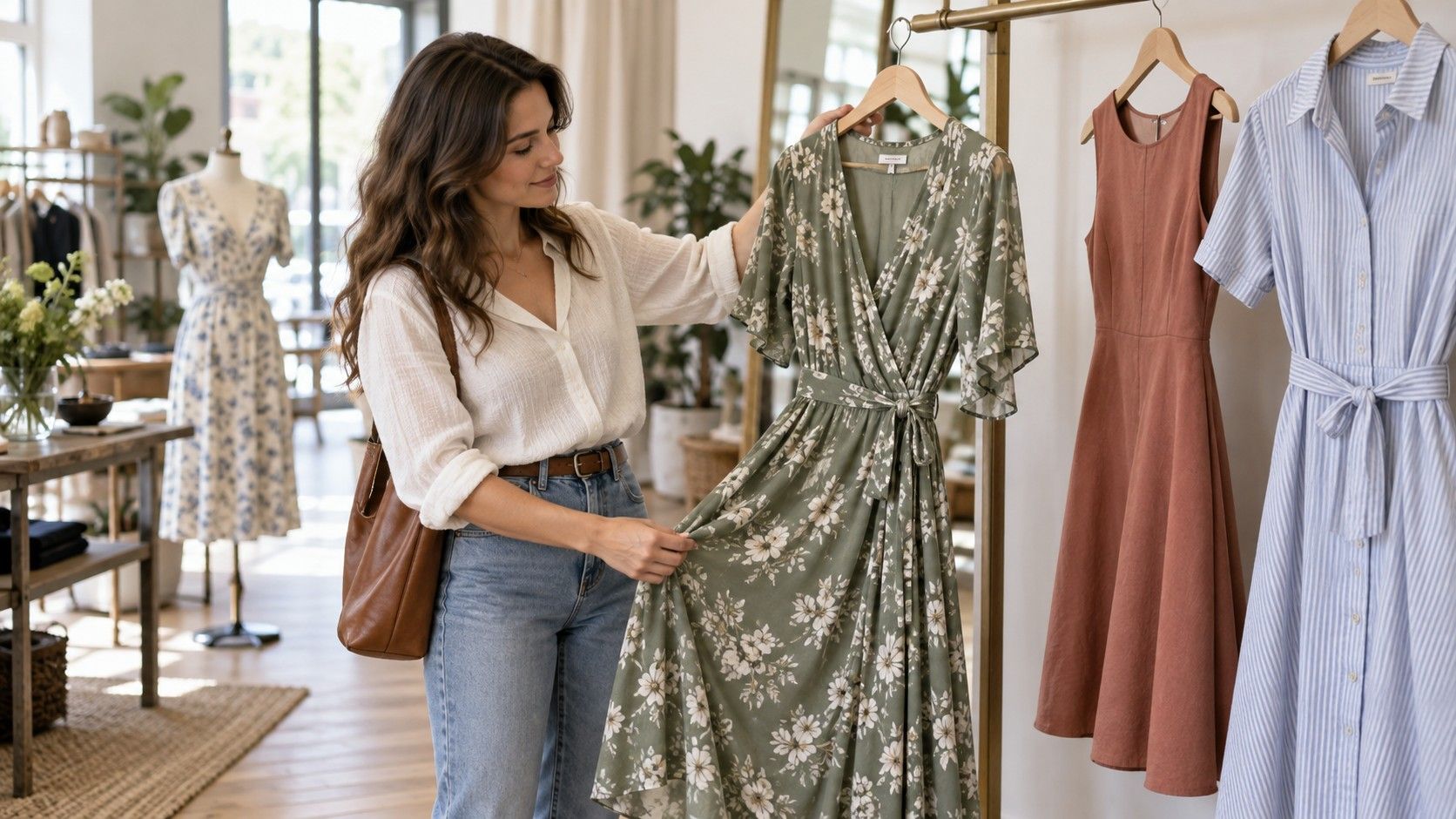
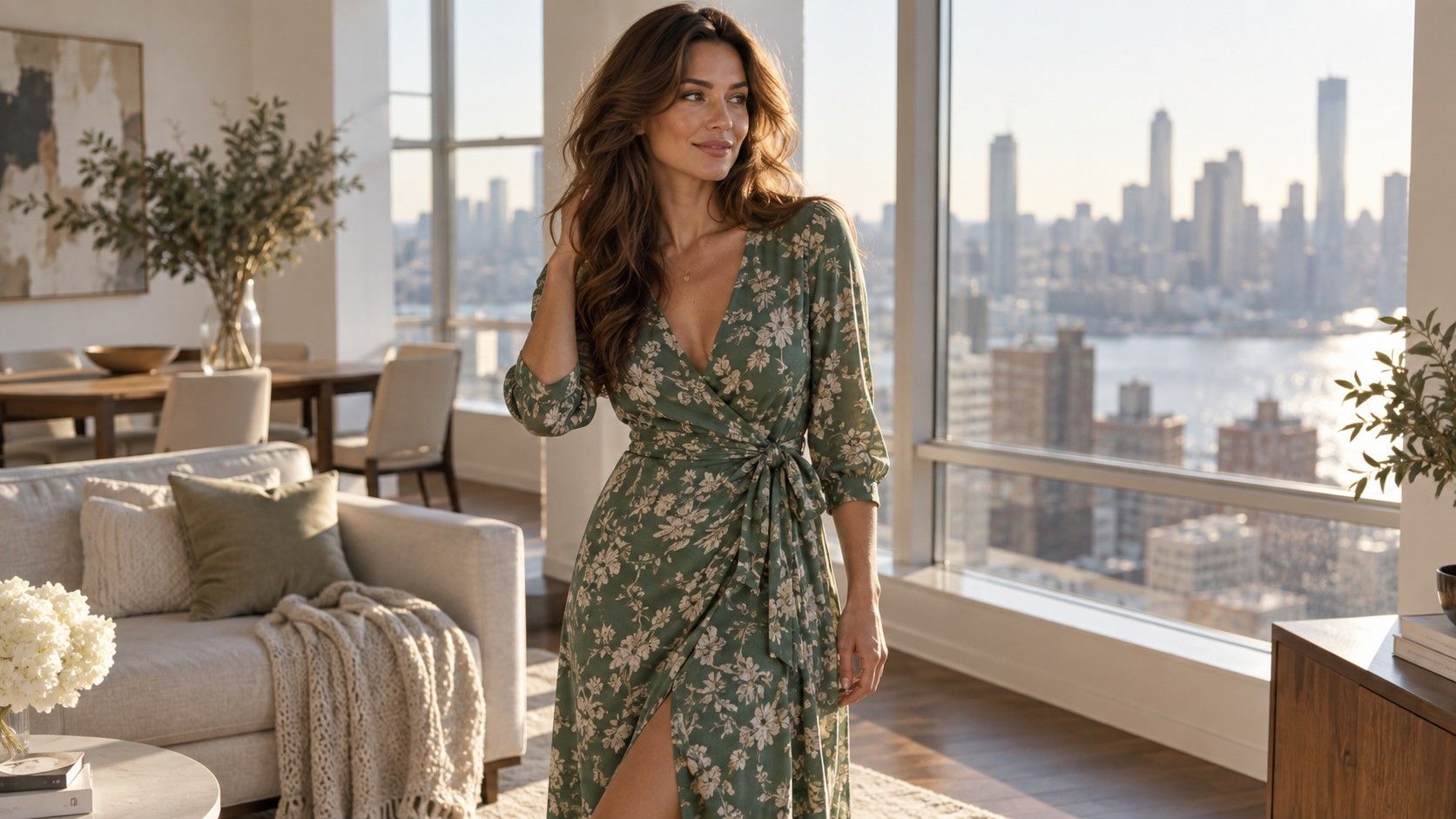
Wrap dresses are a familiar recommendation for an hourglass shape because their diagonal line and adjustable waist often work well together. Still, the word "wrap" covers a lot. A true wrap with long ties gives room to adjust the waist and bust, while a faux wrap may be fixed at the side seam and pull open when you sit. Test the neckline by leaning forward and taking a few steps. If you would need a pin, camisole, and constant attention to wear it, it is not an easy dress even if it looks good in the mirror.
Fit-and-flare dresses, shirt dresses with a loose belt, and bias-cut midis are other useful starting points. A fit-and-flare style gives the waist a clear stopping point and has room through the skirt. A shirt dress can look cleaner when the buttons lie flat over the bust and the belt is more relaxed than tight. Bias fabric moves beautifully, but it may cling differently after a humid commute or a long dinner. I would always check the side view and the back before buying it; the front rarely tells the whole story.
| Garment | Why it can work | Check before buying |
|---|---|---|
| Wrap dress | Adjustable waist and diagonal front line | The neckline stays closed when you sit and bend |
| Fit-and-flare dress | Defined middle with room through the skirt | The waist seam lands at a comfortable point |
| High-rise straight trousers | Shows the waist without gripping the leg | The back waistband does not gape after sitting |
| Single-breasted blazer | Frames the torso with a clean vertical line | The buttons close without strain across bust or hip |
Build separates around fit, not the label on the hanger
How to dress an hourglass shape often becomes easier once you stop looking for one magic garment. A fitted tank with high-rise straight trousers is one dependable formula. So is a soft blouse tucked loosely into an A-line skirt, or a fine knit with jeans that fit at the hip. In each case, the top and bottom have enough room at their widest points, while the middle does not disappear under excess fabric.
Button-front shirts deserve a slow fitting-room test. If the shirt pulls between buttons at the bust, sizing up may fix the chest but leave the shoulders and waist loose. A small alteration, a style with darts, or a softer pullover blouse may be a better answer. It is tempting to blame the body shape, yet the issue is usually a pattern cut for a different bust-to-waist ratio. A good tailor can often take in a waist or adjust a side seam, but cannot create extra width where a garment has none.
Skirts offer a similar lesson. A pencil skirt can feel polished when it has a back vent and enough ease to walk normally. An A-line skirt gives more movement and usually makes a tucked top easy to wear. With either cut, inspect the waistband at the back. If it fits the hip but stands away from the waist, a belt may hide the gap for an hour; it will not fix the underlying fit. Try the next size or ask whether the waist can be altered before committing.
Get jeans and jackets right at the difficult points
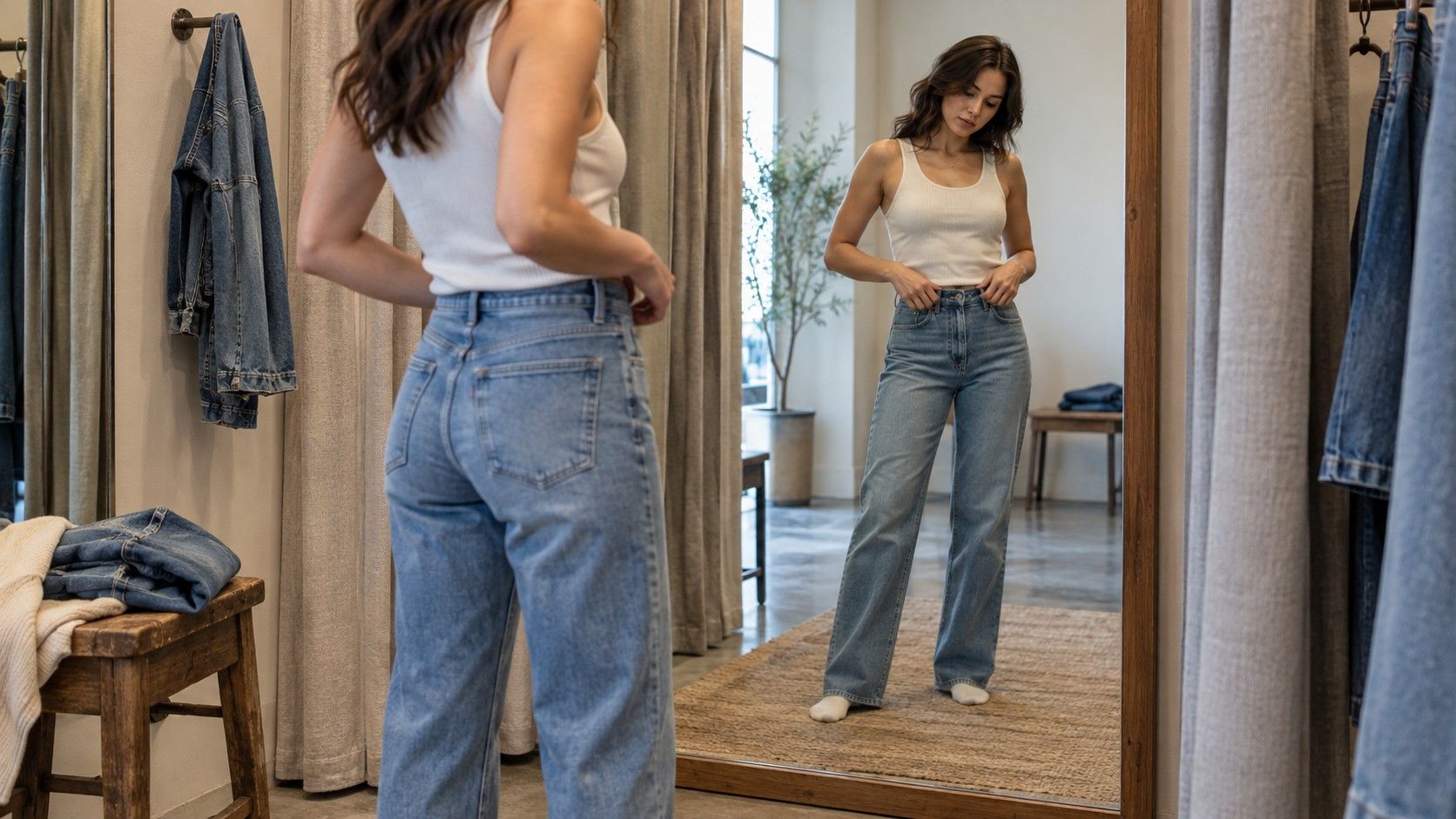
Jeans are where generic advice tends to fall apart. An hourglass body may need enough room through the seat and thigh, plus a waistband that follows a smaller waist. High-rise straight, slim-straight, bootcut, and wide-leg jeans can all work, provided the rise and upper fit are right. A skinny cut is not automatically more flattering, and an oversized wide leg is not automatically balanced. Put the pair through a quick real-life test: sit down, climb a step, and look at the waistband after you stand again.
Waist gaping is a construction issue, not a personal failure. If the jeans fit well at the hips and thighs but leave a small gap at the back, look for a contoured waistband or consider a simple centre-back alteration. Sizing down until the thighs pull is rarely a bargain. Rigid denim may relax a little with wear, while stretchy denim can feel comfortable immediately but lose recovery after several hours. The fabric label matters as much as the cut name.
With jackets, start at the shoulder seam and the bust rather than the waist. A single-breasted blazer with gentle waist shaping often gives a clean outline, especially over a thin knit or fitted T-shirt. Double-breasted styles can be excellent too, but the extra front fabric needs to sit flat when you are seated. If the jacket closes at the bust and pulls across the hip, a slightly longer cut or a size change may help. Do not settle for a blazer that only works while you stand still with your arms at your sides.
Use layers and knitwear to control bulk
Layering can make an hourglass silhouette feel either relaxed or crowded. A cropped denim jacket or cardigan that ends around the waist makes the middle easy to see. A longer coat worn open creates a vertical frame and can be useful when you prefer less emphasis at the waist. Neither option is morally better. They simply give different proportions, so it helps to decide which one suits the day before adding more pieces.
Watch where thicker fabrics gather. A chunky cardigan under a fitted coat can bunch at the waist and make the coat look too small, even when the coat itself fits. A fine-gauge sweater tucked into trousers often behaves better than a thick sweatshirt, particularly with a high rise. If you like volume, keep it in one place: a roomy sleeve with a close-fitting skirt, or wide trousers with a simple knit. When every layer is oversized, the outfit can feel heavy rather than relaxed.
Necklines are another quiet lever. A V-neck or open collar often leaves visual space through the centre; a square neckline can put more focus on the upper body; a crew neck gives a plainer, more compact look. None is reserved for a body type. Choose the one that feels comfortable with your bust and the jewellery or jacket you plan to wear. A neckline that gapes, rubs, or demands constant checking is not worth defending as a style choice.
Keep a few reliable formulas, then break them when you want to
It is useful to have two or three outfits you can put on without negotiation. For example, straight jeans, a tucked tee, and a blazer work for errands or a casual office. A wrap dress with comfortable shoes can handle a dinner when the tie and neckline have already passed the sitting test. High-rise trousers, a fine knit, and an open cardigan are a calm option for travel days. These are starting points, not uniforms for every person with an hourglass body shape.
Take a few photos of outfits you genuinely enjoyed wearing, including a side view. After several weeks, you may notice that you prefer a lower waist seam, a straighter trouser leg, or jackets with less shaping than body-shape advice tends to suggest. That is useful evidence. The best style guide is the one that leaves you with clothes you can move in and repeat, rather than a closet full of supposedly flattering pieces that never quite make it out the door.