A neckline is a small part of a garment with an outsized effect on the whole outfit. It frames the face, changes how much of the chest and shoulder area is visible, and decides whether a jacket, necklace, or scarf has room to work. The best necklines for body shape are not fixed by a chart. They are the ones whose depth, width, and construction support the proportion and mood you want that day, while staying comfortable through real movement.
A neckline changes the whole upper silhouette
Think of the opening at the neck as a frame. A V-neck makes a downward line through the centre. A scoop neck makes a rounded open space. A square neck creates visible horizontal and vertical edges, while a boat neck travels outward toward the shoulders. Each can look polished on many body types. The difference is what it asks the rest of the outfit to do. A wide boat neck makes the shoulder line more present; a narrow V-neck may make a structured jacket feel less severe.
Start with the garment rather than your category. A high, narrow crew neck in thick knitwear can feel cosy and intentional. The same height in a stiff shirt may feel tight or crowded. Put the top on, lower your chin, raise your arms, and take a full breath. If the neckline pulls backward, rubs the throat, or exposes more than you expect when you bend, it is not a good everyday fit regardless of how flattering it looked for a photo.
Compare depth and width, not just neckline names
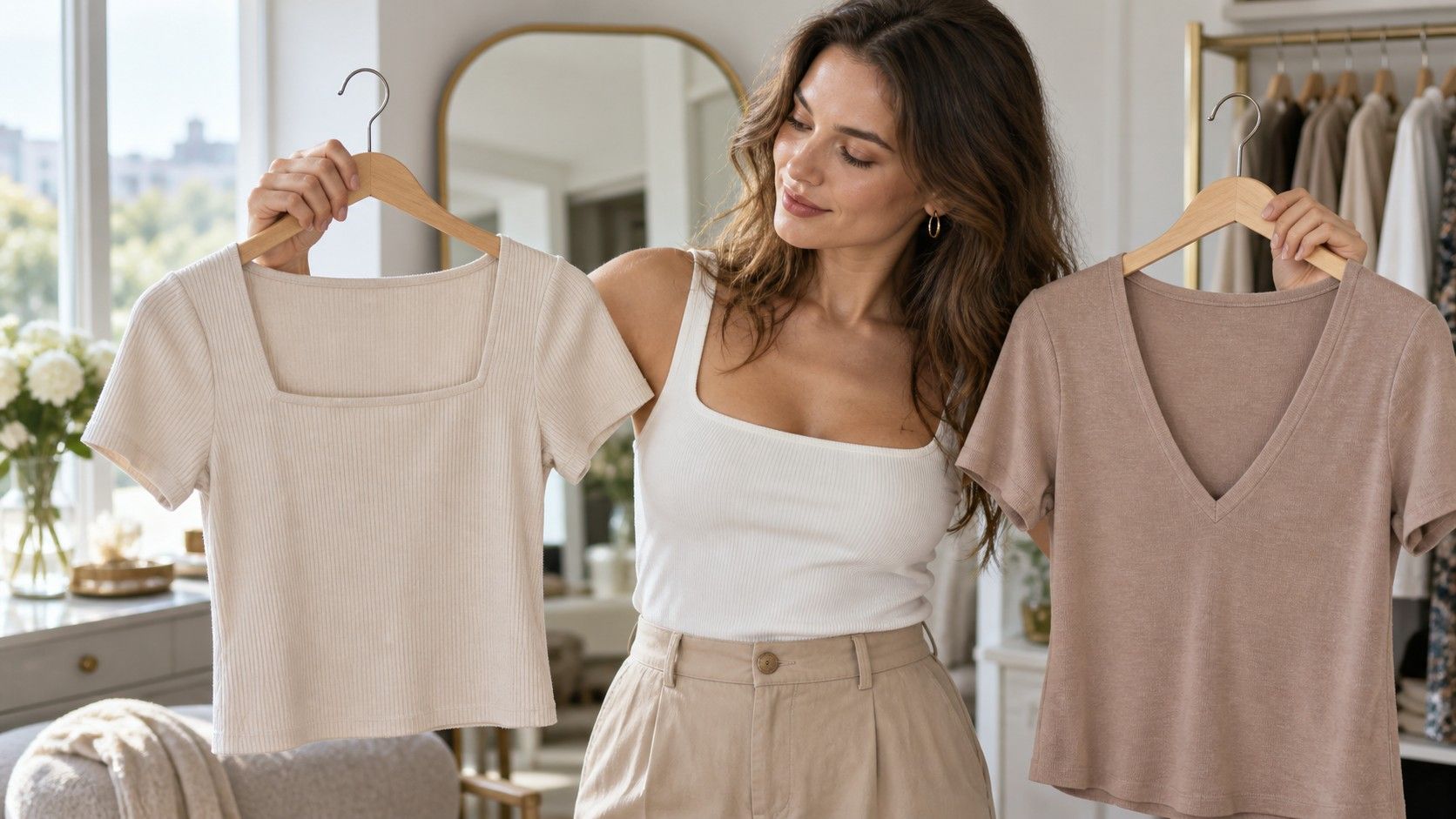
Two V-necks can behave completely differently. One may be a shallow notch that barely changes the collarbone area; another may drop far enough to need a camisole for work. The width of the V also matters. A narrow V gives a focused vertical line, while a broad V opens more of the upper chest. Scoop necks have the same variation: a small scoop can read almost like a crew neck, and a broad scoop can make the shoulders look more open.
Try a simple mirror comparison with hair tied back. Put on two tops with different openings but a similar colour and fit. Look first at your face, then at the relationship between neckline and shoulders. If you have a fuller bust, make sure a scoop or V lies flat rather than pulling sideways. If you have a long neck, a high neck may feel especially elegant; if you prefer more open space, choose a lower or wider shape. Preference is a valid fitting criterion.
Choose a neckline for the outfit goal
When you want a vertical, streamlined outfit, a V-neck, open collar, or a fine pendant worn in a modest opening can reinforce that direction. These options are often comfortable under blazers because they leave a little visual space between lapels. When you want a stronger shoulder line, a boat neck, square neck, or wide scoop can do that without needing decorative sleeves. They work well with simple trousers or a straight skirt because the top already has a clear point of interest.
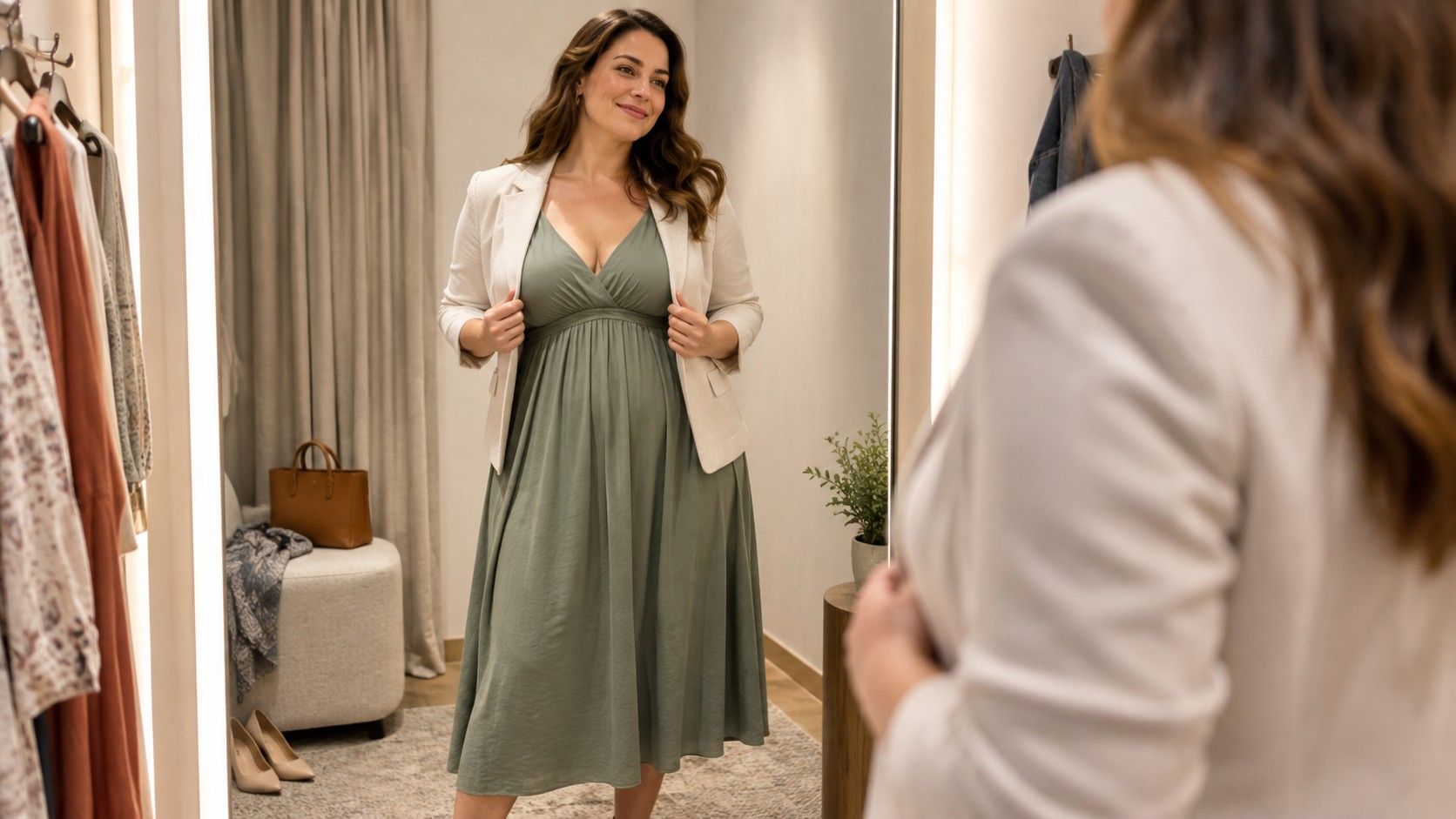
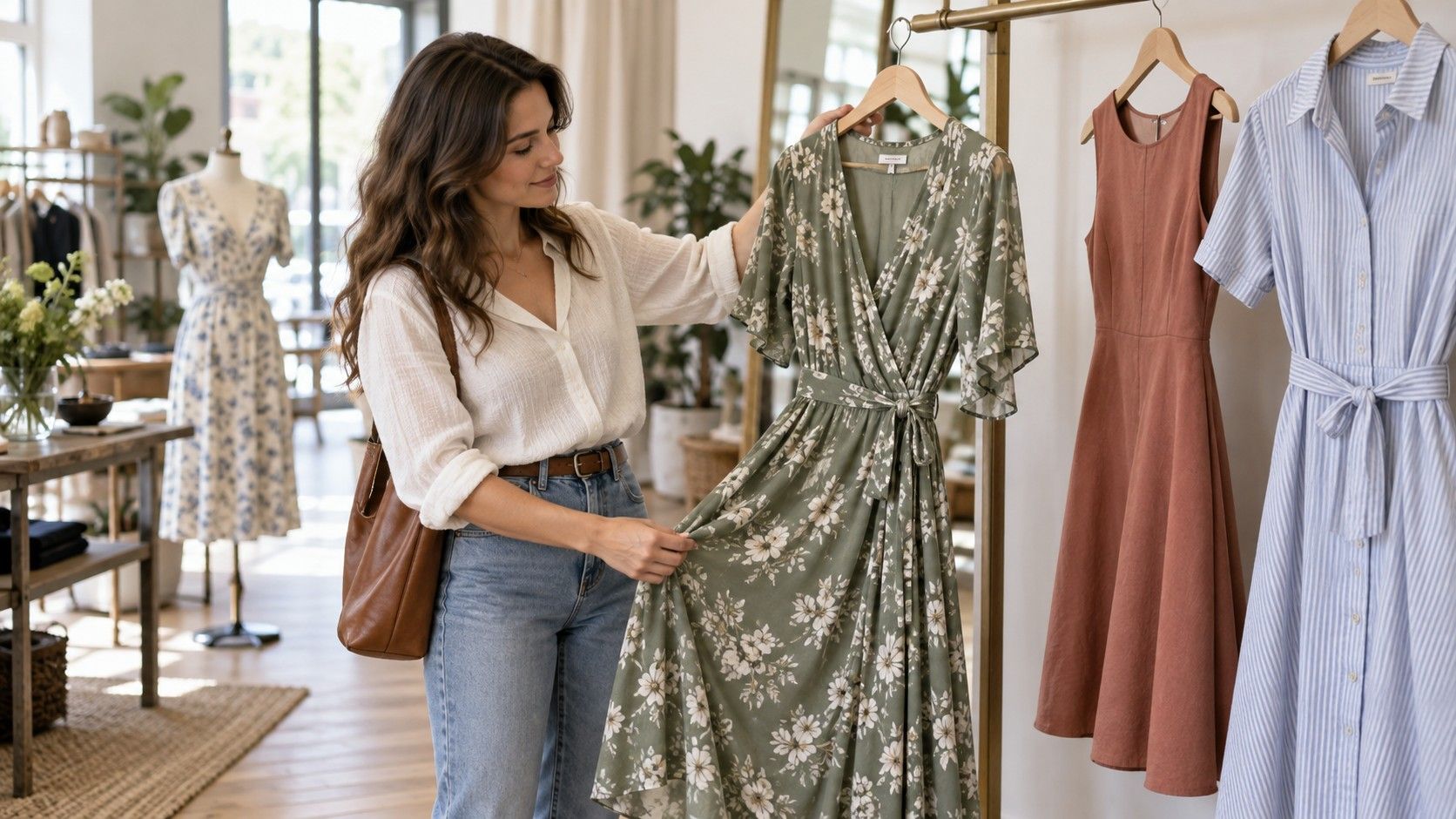
For a defined waist outfit, the neckline should not have to compete with every other detail. A wrap top with a V-neck and a belt already has two directional lines, so plain earrings and a smooth skirt may feel balanced. A simple column dress can take a square neckline or bold necklace more easily. If an outfit feels busy, remove one element before deciding the neckline is wrong. Often the top is fine; it is the extra ruffle, oversized earring, or competing jacket that creates noise.
| Neckline | What it often emphasises | Useful check |
|---|---|---|
| V-neck | Vertical space through the centre | It stays closed when you lean forward |
| Scoop neck | Soft, rounded openness | The edge lies flat across the bust |
| Square neck | A defined frame around collarbones | Straps do not slide outward |
| Boat neck | Width across shoulders and upper chest | It does not pull toward the neck |
Use necklines to support different body-shape preferences
If you like to soften a prominent shoulder line, a V-neck, narrow scoop, or open collar can create an easy centre line. If you want to draw attention upward from the hips, a square or boat neck can provide that focus. A rectangle body shape may enjoy a square neckline with a defined waist seam, while an hourglass shape may like a V-neck that echoes a wrap waist. These are options to test, not instructions. The same body can look excellent in every one of these shapes when the garment fits.
Bust fit changes the choice more than generic body type does. A higher neckline may feel secure and smooth under a blazer. A wrap or V-neck can be comfortable when it has enough overlap and a small hidden snap, but a shallow V may pull open if the bust is fuller. For a smaller bust, a square or scoop neckline may create the amount of openness you enjoy without needing padding or structure. The right answer is the one you stop thinking about after leaving the house.
Pair necklines with jackets, layers, and jewellery
Layers can obscure a neckline or make it more useful. A V-neck under a single-breasted blazer repeats the lapel line and usually looks calm. A crew or boat neck under the same blazer makes a more graphic contrast. Collared shirts are most comfortable when the collar has enough room around the neck and the top button is not expected to do all the work. An open cardigan lets nearly any neckline show, but its length and thickness can shift the balance of the outfit.
Jewellery needs space. A short pendant often sits well in a V or scoop; a close collar necklace can work with a crew or boat neck; earrings may be enough with a detailed square neckline. Try the outfit in a mirror after adding just one accessory. If the jewellery disappears, it may be the wrong length. If it competes with the neckline, remove it rather than layering more. A clear neckline and one considered detail look more confident than a crowded upper half.
Use the mirror test instead of a rulebook
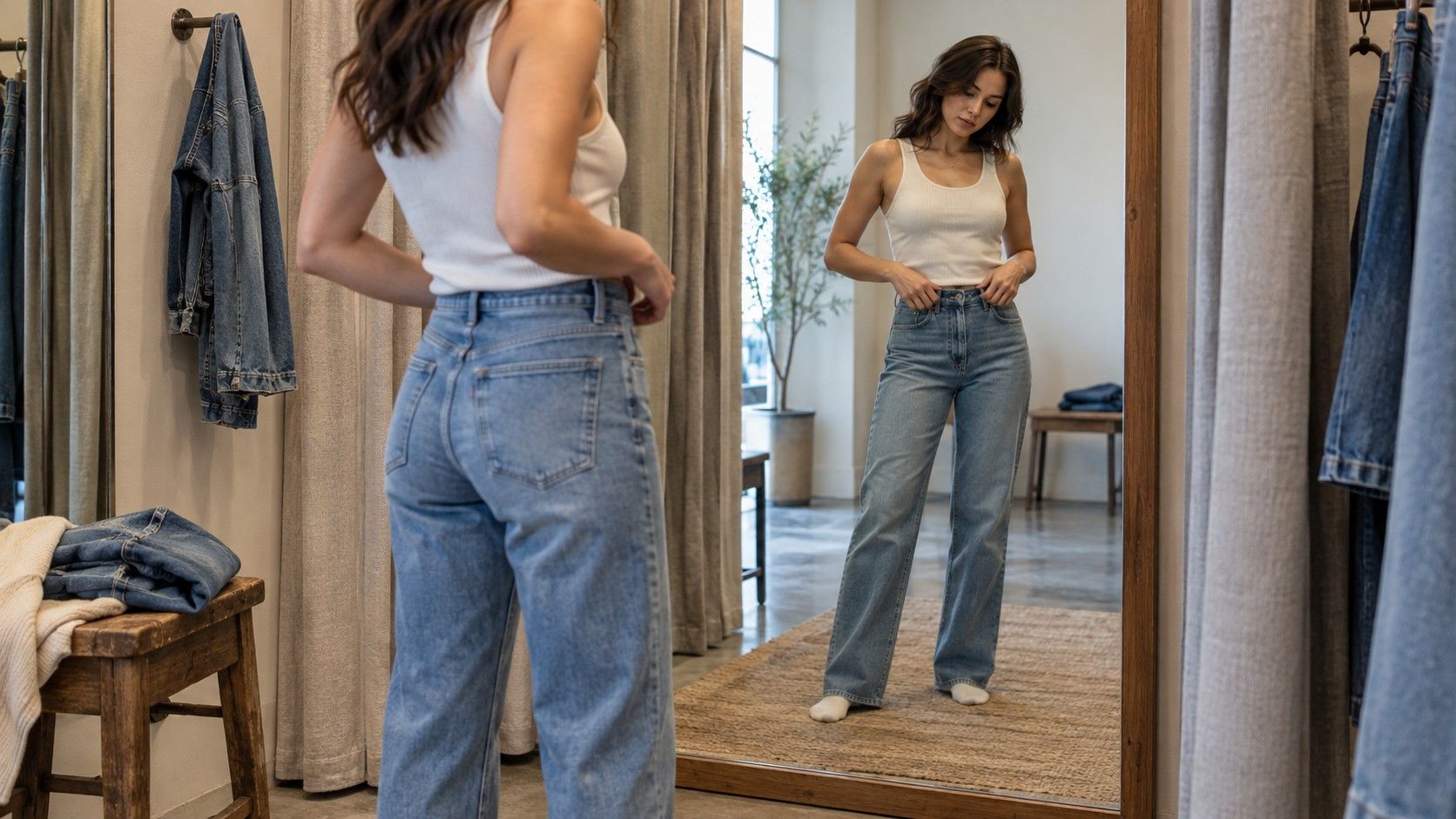
For any new top or dress, take a front and side photo in ordinary light. Check the neckline while standing, sitting, and wearing the bra or layer you would actually use. Look for pulling at the shoulder seams, a gaping edge, straps that drift, and an opening that changes too much with movement. These are practical reasons to leave a garment behind. Do not reject a neckline merely because a body-shape chart says it is unsuitable; the garment may have exactly the depth and width that work for you.
Keep a mental shortlist of combinations you trust: perhaps a V-neck under a blazer, a square neck with a simple skirt, or a scoop neck with your favourite jeans. That makes getting dressed faster without making it dull. Necklines for body type become helpful when they teach you to notice construction, comfort, and visual balance. They become limiting when they convince you that your shoulders, bust, or neck need correcting. Clothes are there to give you choices, not to narrow them.