Getting dressed for a pear body shape is less about correcting anything and more about deciding where an outfit should feel easy. If your hips are visibly broader than your shoulders and you have a defined waist, the frustrating part is often not finding attractive clothes; it is finding pieces that sit well together. A top may look great on its own, while the full-length mirror tells a different story once narrow trousers are involved. The useful aim is a deliberate silhouette: give the upper half enough presence, let the lower half move comfortably, and keep the waist from disappearing under fabric.
Start with proportions, not a label on the hanger
A pear body shape usually shows up as a lower half that carries more visual width than the shoulders, often with a clear waist between them. That description is a starting point, not a test you have to pass. Take a straight-on photo in fitted basics or stand in front of a full-length mirror: notice the relationship between your shoulder line, waist, and fullest hip rather than chasing a particular measurement ratio. A softer shoulder, fuller thigh, or a prominent hip curve can all matter more to fit than the word on a size tag.
The first practical check is where a garment pulls. A shirt that strains across the hips when worn untucked is not necessarily the wrong style; it may simply need to finish above the widest point or be worn open as a layer. Similarly, trousers that fit the hips but gape at the waist need a different rise, a curved waistband, or a tailor, not a smaller body. I find this distinction calming: the clothing has a job to do, and it is allowed to be a poor match for the job.
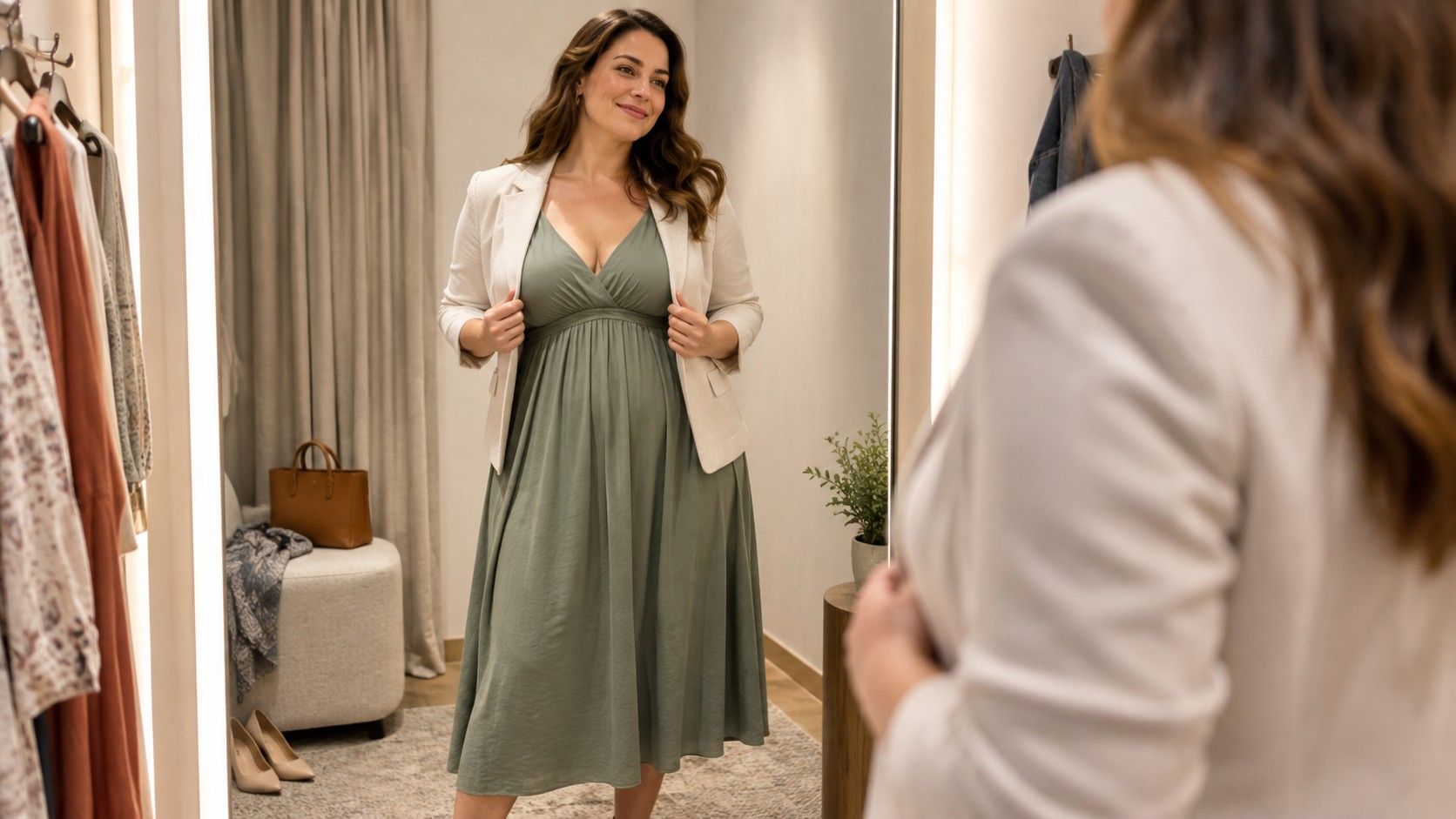
Before buying a new piece, try the three-view test. Look from the front, then turn sideways, then take two steps. A silhouette that seems balanced while standing still can become awkward if a jacket catches on the hip or a skirt rides upward. Comfort is evidence here. If you keep tugging a hem down during a changing-room walk, the item will probably annoy you on an ordinary Tuesday as well.
When a top feels too small beside your hips, add interest above the waist
For pear shape body clothes, the upper half often benefits from detail that gives the eye somewhere to land: a boat neck, square neck, gentle puff sleeve, shoulder seam with a little structure, or a print held mainly above the waist. None of these are compulsory tricks. They work because they broaden the visual frame around the shoulders without making the garment tight or theatrical. A crisp cotton shirt with a defined collar can do the same job as a statement sleeve, and it is usually easier to wear repeatedly.
Necklines are worth trying in person because their effect changes with posture and bust shape. A wide scoop or boat neckline can open the shoulder line; a V-neck creates a clean vertical break, particularly under a blazer. Very narrow straps or a clingy high-neck tank can make the upper half look visually quiet next to a fuller lower half, but that may be exactly the contrast you like. The question is whether the outfit feels intentional, not whether it follows a diagram.
Length matters more than most styling advice admits. Tops that stop at the narrowest part of the waist can highlight it neatly. A longer shirt often looks better when it passes the fullest hip rather than ending directly on it. For example, a hip-length cardigan that closes at the widest point can look and feel restrictive, while the same cardigan worn open over a tucked tee creates a vertical line and leaves room through the hips. Test both versions before deciding that the cardigan itself is the problem.
Choose trousers and skirts by how they sit when you move
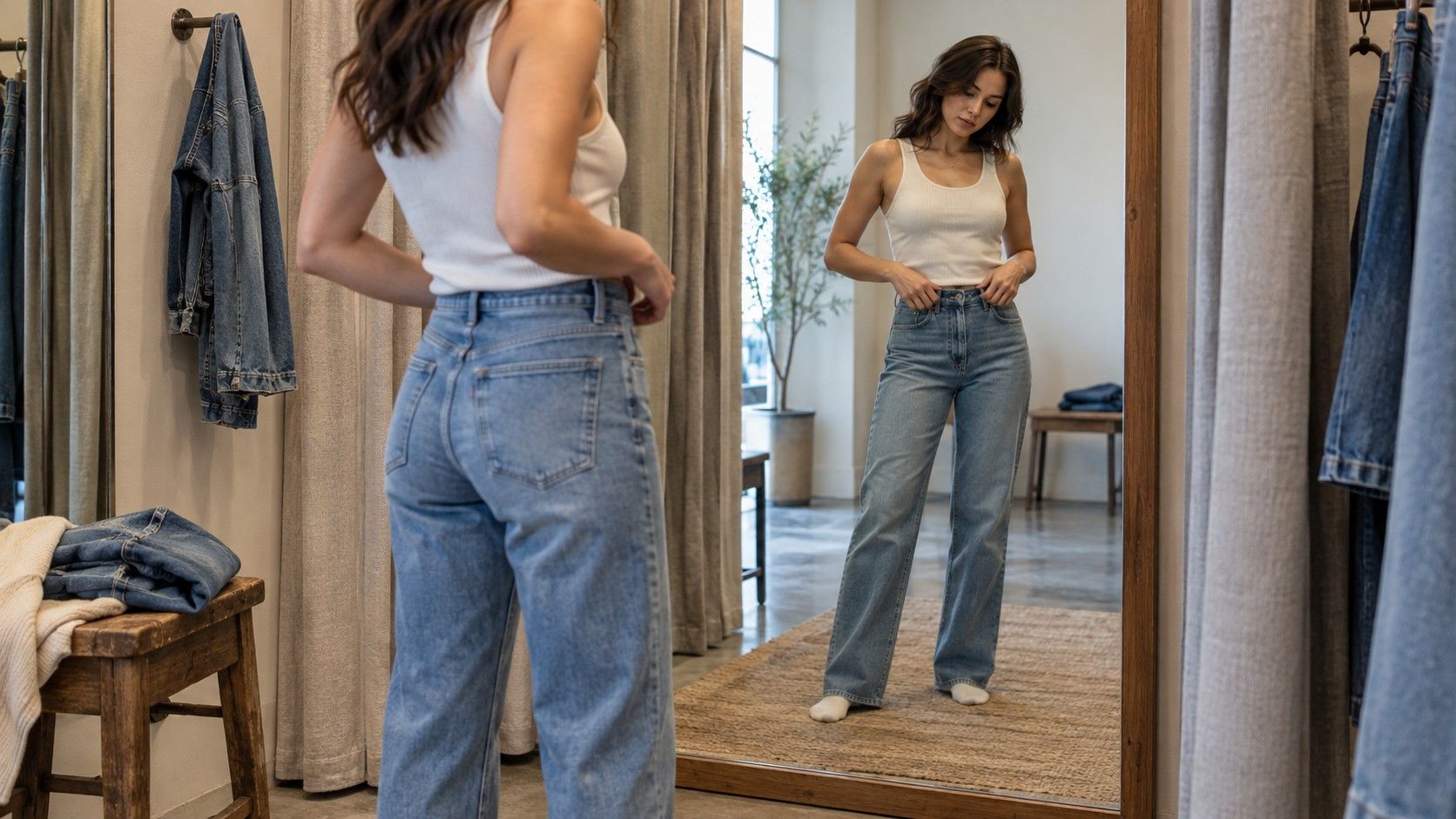
The most useful trousers for many pear-shaped figures have enough room through the hip and thigh before the leg begins to narrow. Straight-leg, wide-leg, bootcut, and gently flared cuts are common favourites because the hem gives the lower half a longer, steadier line. High-rise styles can make the waist easy to see, but the rise should feel comfortable when you sit. A waistband that digs in after ten minutes is not a flattering investment, no matter how good it looks under shop lighting.
Look at pockets, washes, and fabric weight with a mildly suspicious eye. Stiff front pockets that flare open, whiskering across the hips, or a very pale wash concentrated at the upper thigh can add bulk where you may not want it. That is not a ban on light denim. It is simply a reason to check the front view before cutting off the tags. Smooth dark denim, a flat-front trouser, or a fluid trouser with a side zip often gives a cleaner result when you want the top to carry more attention.
| Piece | What to check in the fitting room | A practical alternative |
|---|---|---|
| Jeans | The waistband stays put when you sit; front pockets lie flat. | Try a curvy fit, straight leg, or a one-size-up hip with the waist altered. |
| Tailored trousers | The pleats do not pull open and the fabric falls from the hip. | Choose a flat front or a soft wide leg with a defined waist. |
| A-line skirt | The waist is secure without compressing; the skirt skims rather than sticks. | Try a midi length or a bias-cut skirt with a simple top. |
| Slip skirt | The fabric does not cling at the hip after a few steps. | Use a slightly heavier satin or add a smooth, non-gripping layer underneath. |
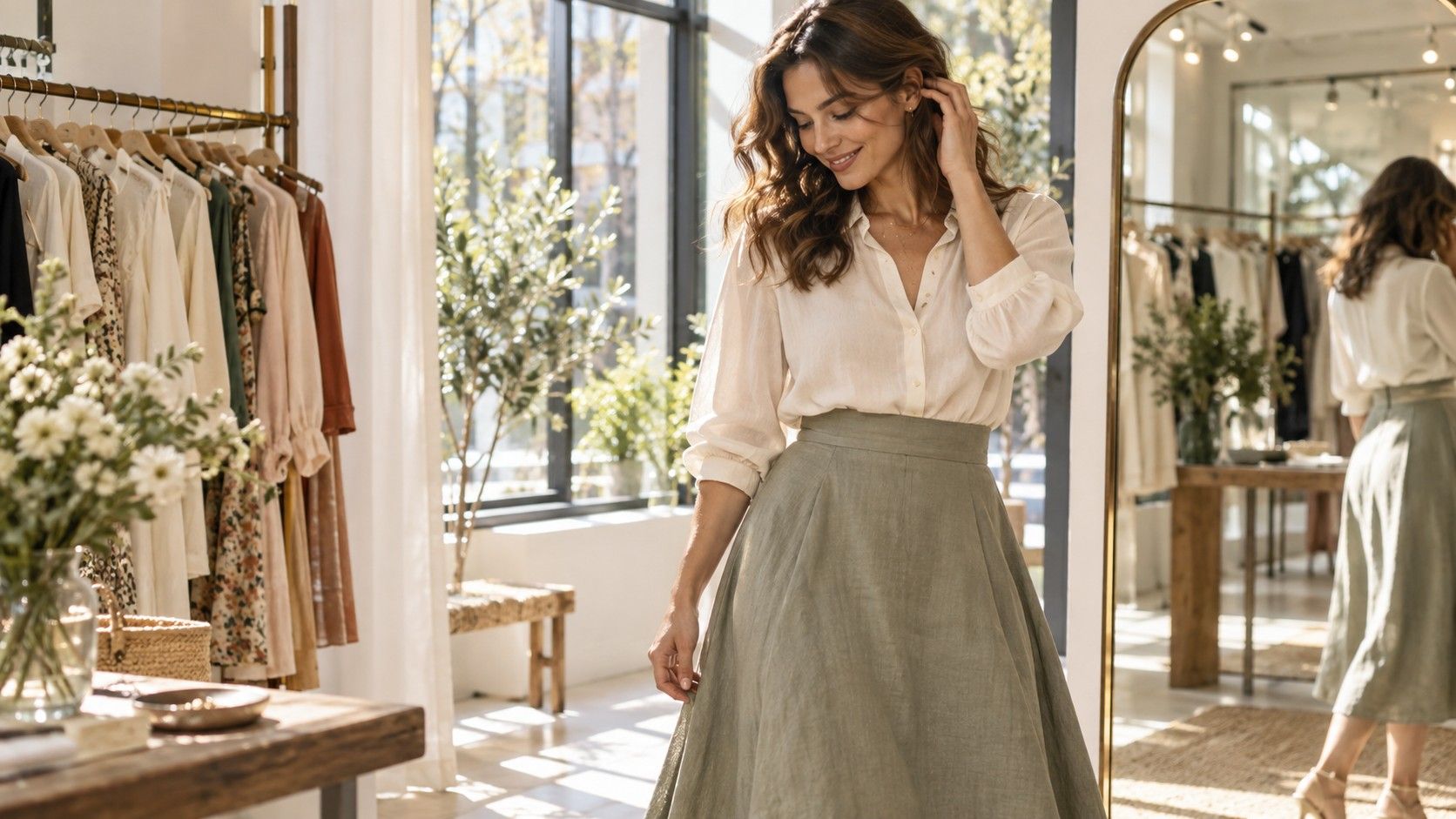
An A-line skirt is popular for good reason: it follows the waist and leaves space as it falls, so it rarely needs constant adjustment. But it is not the only answer. A straight midi skirt with a back slit can look sharp if the fabric has enough give, while a bias-cut skirt can be elegant when it skims rather than clings. The reliable rule is not “wear volume”; it is “make sure the fabric has somewhere to go.”
Use colour, texture, and layers to steer the eye without making an outfit fussy
Colour contrast is one of the quickest ways to change an outfit’s balance. A lighter, brighter, patterned, or textured top with darker trousers naturally brings attention upward. Think ivory knit with navy straight jeans, a striped shirt under a charcoal blazer, or a soft red blouse with dark wide-leg trousers. You do not need to turn every lower half into black. A deep olive, chocolate brown, indigo, or even a quiet print can work just as well when the top has a little more visual presence.
Texture counts too. A ribbed knit, boucle jacket, embroidered blouse, or linen shirt gives the upper half dimension, while a smoother trouser fabric keeps the line below calm. The caveat is bulk: a thick cropped sweater can add width around the ribcage but may also hide the waist if it ends in the wrong place. Half-tucking the front, choosing a finer gauge, or pairing it with a high-rise skirt can solve that without abandoning the sweater.
Layers need a small reality check. A blazer with structured shoulders can be excellent for balancing hips, especially when it buttons near the waist and the hem falls below the fullest point. A very short boxy jacket, however, may end exactly where the hip is widest and create a horizontal stop. Put it on with the trousers or skirt you actually plan to wear, fasten it, and take a photo from a few steps back. The mirror at arm’s length is forgiving; a photo is often more honest.
Build outfits around the occasion instead of collecting rules
For a workday, start with a pair of straight or wide-leg trousers that already fits the hips, then add a tucked blouse or fine knit and a blazer with a clear shoulder line. The result is polished because the pieces have separate roles: the trousers provide ease, the top defines the waist, and the jacket gives the frame. If you sit at a desk all day, check the outfit while seated before you leave. A top that looks neatly tucked while standing can bunch uncomfortably under a waistband by lunchtime.
For a casual weekend outfit, a high-rise relaxed jean, a striped boat-neck tee, and an open overshirt are often enough. The overshirt creates vertical lines and can be removed if you get warm; it should not be treated as camouflage. In summer, an A-line midi skirt with a sleeveless top that has a wider neckline can feel cooler and more balanced than a tight top with shorts you keep adjusting. Shoes also affect the line: a low-profile trainer, sandal, or ankle boot may be all you need, while a bulky shoe can make a cropped trouser feel abruptly cut off.
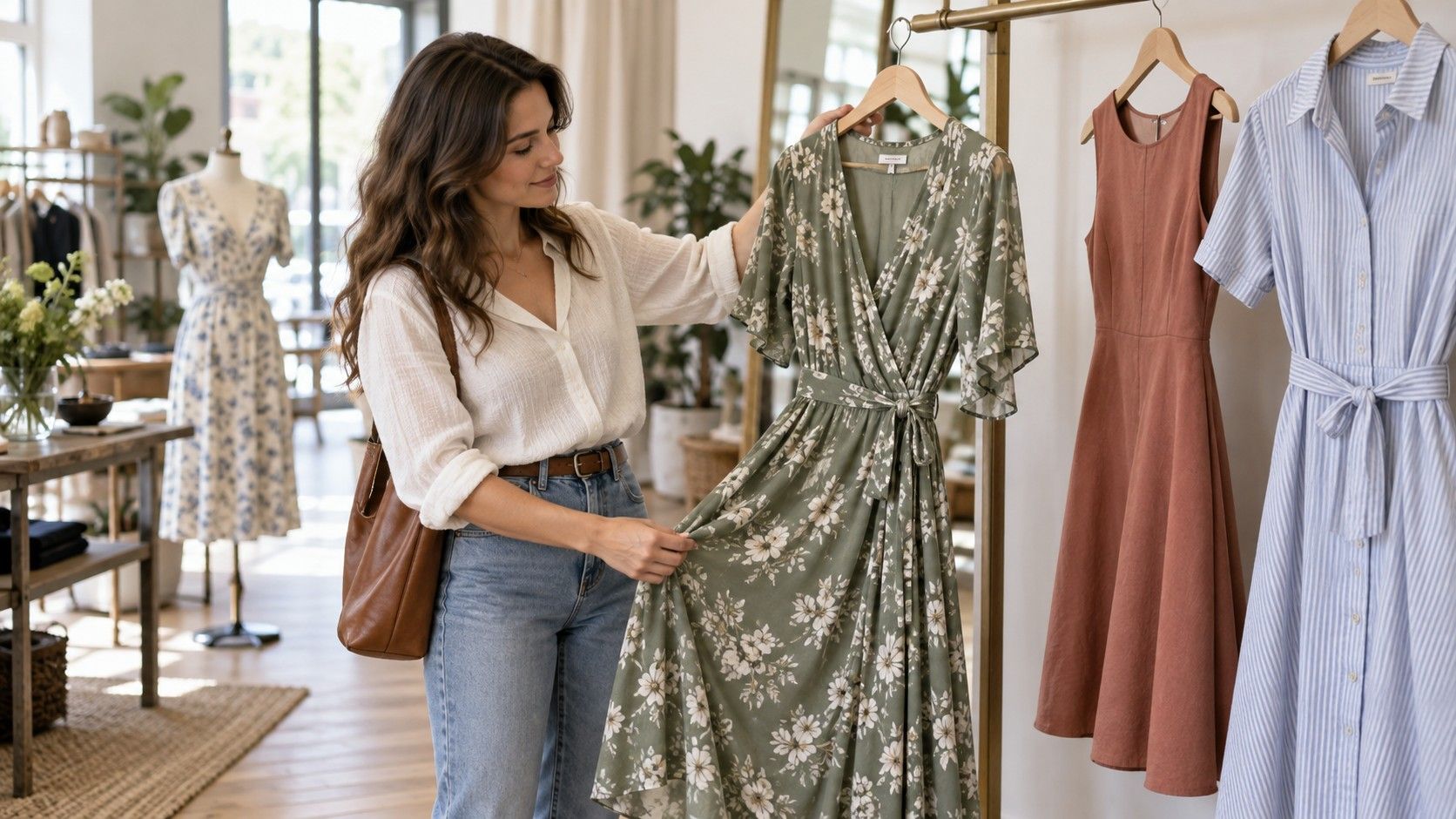
For an event, choose one focal point. It might be an off-the-shoulder neckline, a jacket with a subtle shoulder shape, a bright earring, or a skirt with movement. Trying to add all of them at once can make an outfit feel like a styling exercise. A dress with a fitted bodice and skirt that releases from the waist is a straightforward option, but a column dress with a belt can be just as compelling if you prefer a straighter silhouette. Personal taste gets the final vote.
Do a five-minute outfit check before you decide it is not for you
When something feels “off,” avoid replacing the entire outfit immediately. First, identify the friction. Is the waist hidden? Is the top ending on the widest part of the hips? Are the trousers pulling at the front? Is a layer too short or too stiff? One adjustment usually reveals more than another shopping trip. Tuck the top, swap the jacket length, change the shoe, or try the same trousers with a neckline that shows more shoulder.
Then use the distance test. Step back several feet or use a timer on your phone, because proportions are easier to judge when you are not staring at seams. Check whether you can raise your arms, sit down, and walk without rearranging yourself. A good pear body shape outfit should not require you to hold a pose. It should make room for your day and still look like you chose it on purpose.
Most importantly, keep the pieces that make you feel recognisable. The goal of learning how to dress a pear body shape is not to manufacture a different outline. It is to understand why a square-neck top, a well-cut pair of trousers, or an A-line skirt feels more settled on you, so getting dressed becomes quicker and less argumentative.