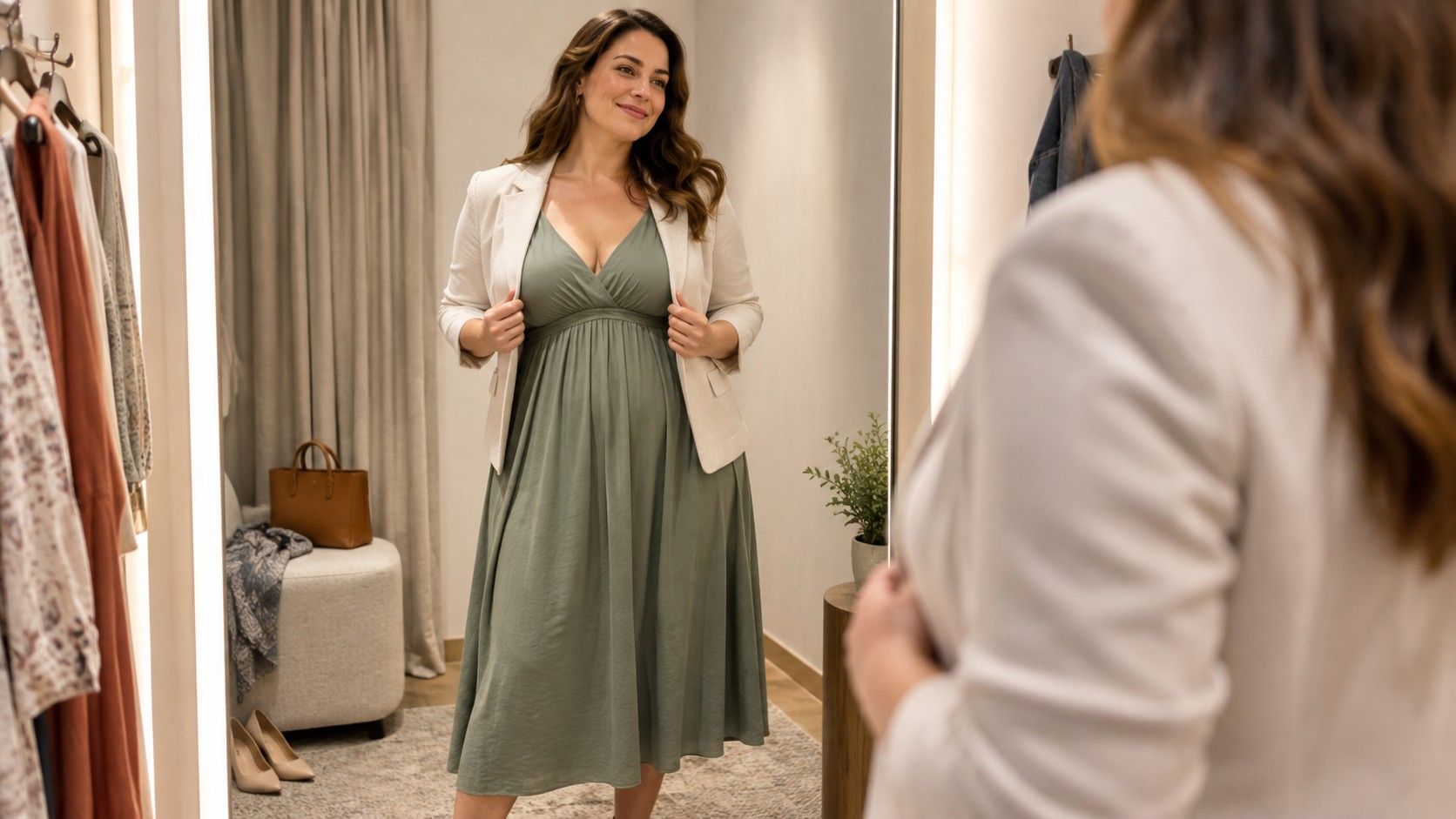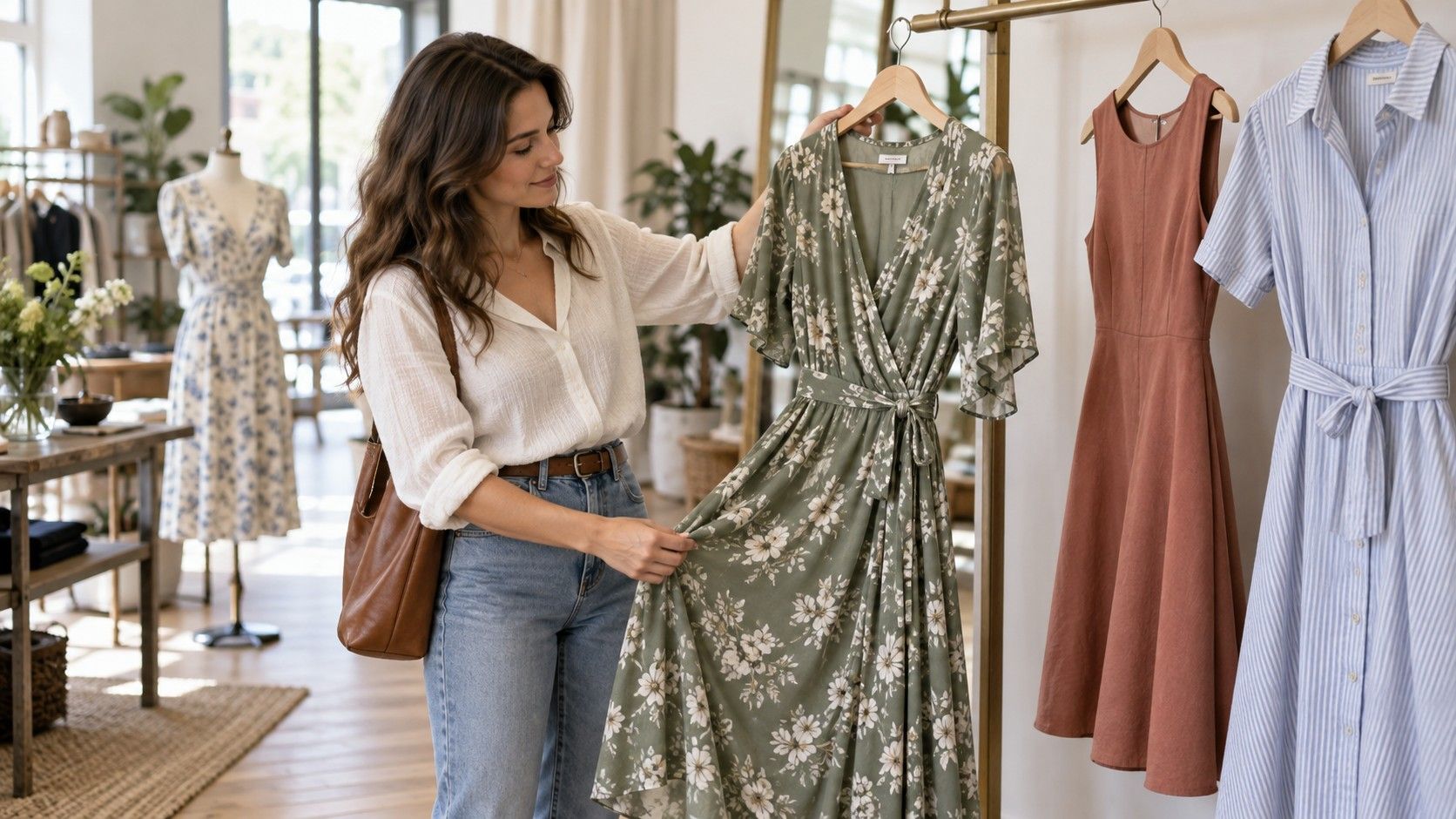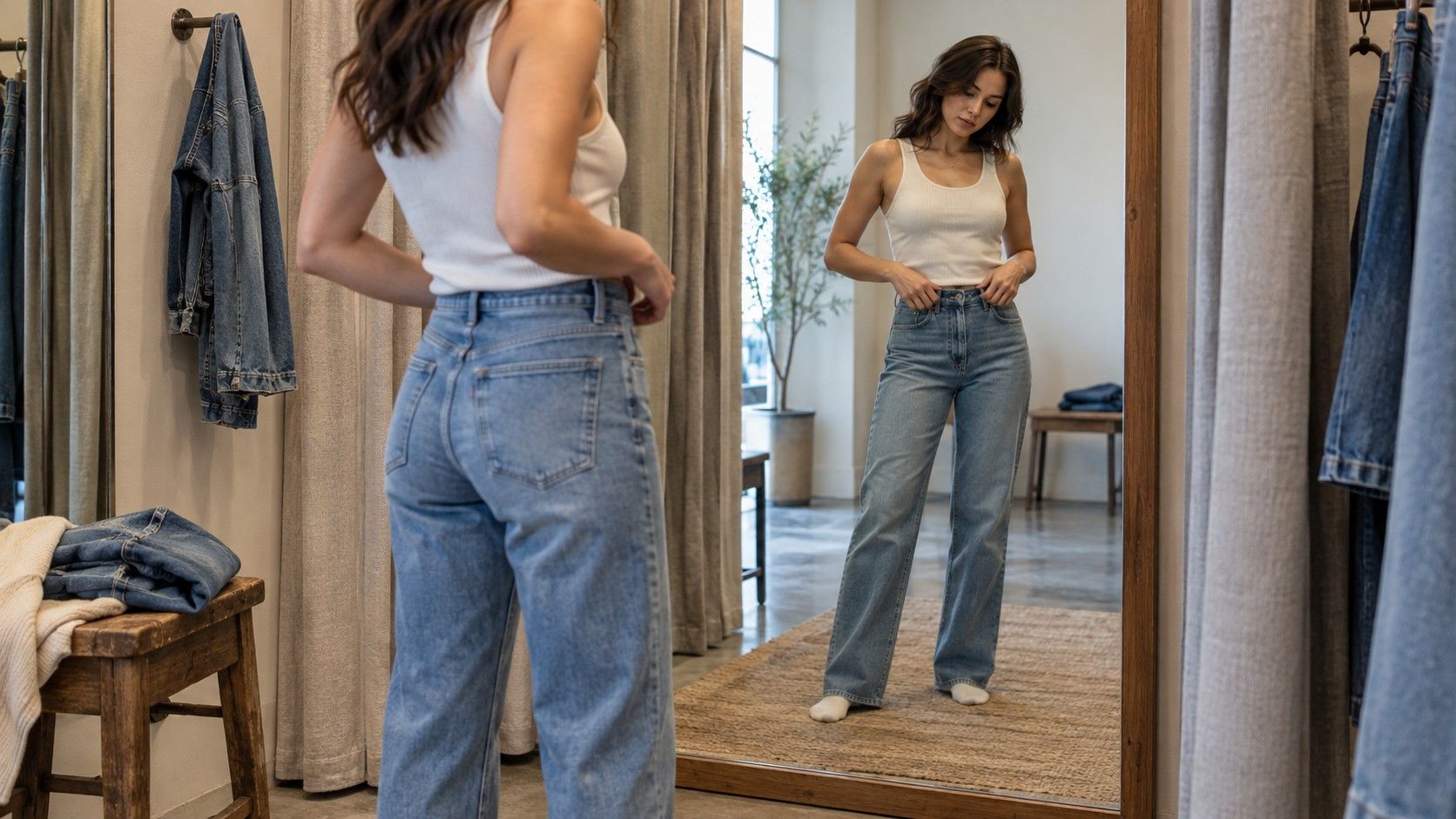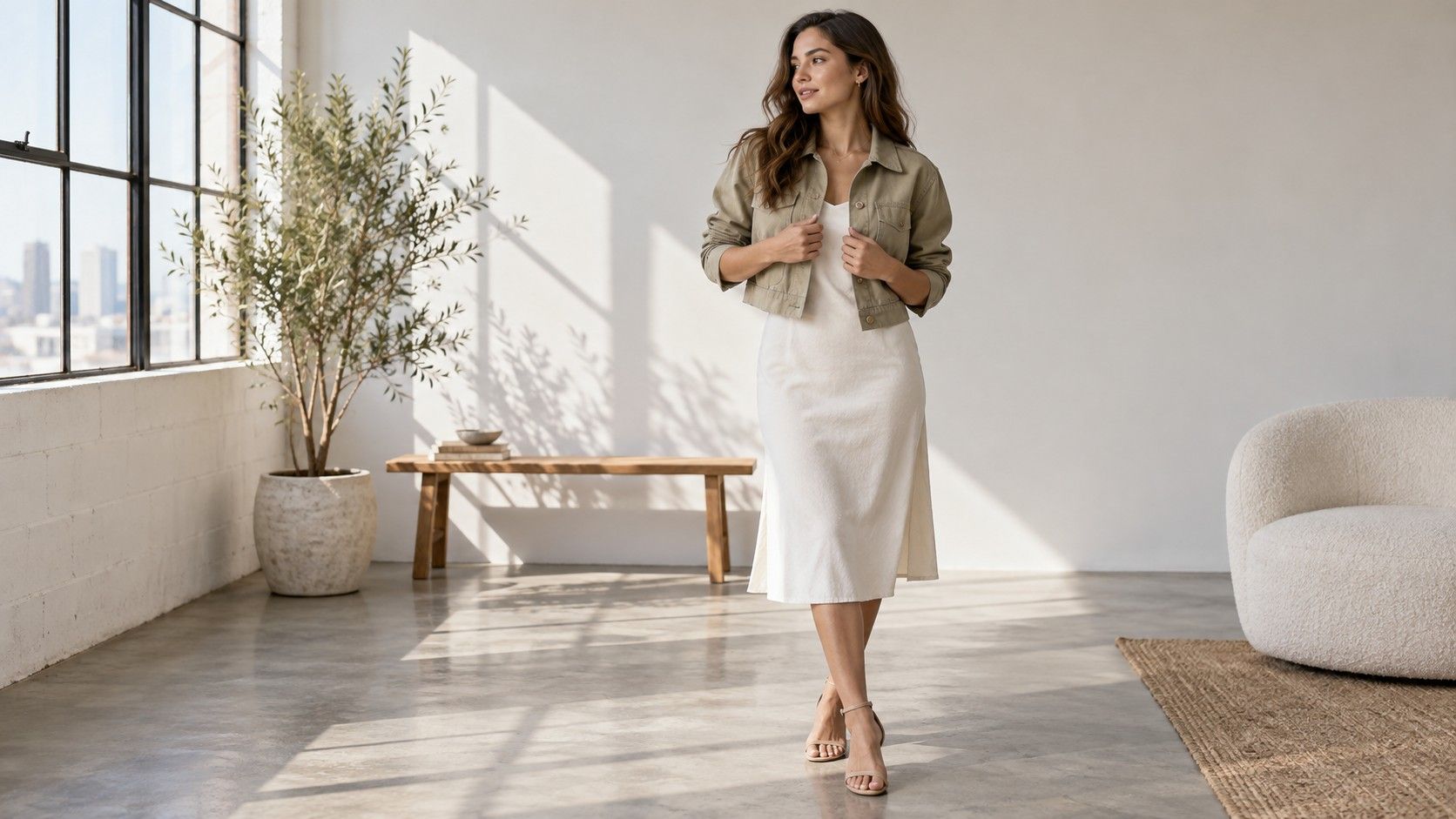
A rectangle body shape usually means the shoulders, waist, and hips sit in a fairly even line. That is a proportion, not a problem to solve. The useful question is whether an outfit feels as relaxed or as defined as you want it to feel on a particular day. A straight silhouette can look sharp in a suit, easy in denim, and unexpectedly elegant in a simple dress. These rectangle body shape clothes ideas use seams, fabric, and layering as adjustable tools rather than rules.
Start with the way your proportions actually read
Stand in front of a mirror in close-fitting leggings and a plain top, then look at the outline rather than the size on the label. If your shoulders and hips appear similar in width and your waist has a gentle rather than strongly pinched curve, rectangle may be a helpful styling shorthand. It does not mean every straight-cut garment will suit you, nor does it cancel out bust, height, posture, or personal taste. A cropped jacket can create a different effect on a long torso than on a short one, even when both people use the same body-shape label.
Try a small comparison before shopping: tuck in one top, leave another loose, and add a belt to a third. Notice where the eye pauses. Some people like a clear waist; others prefer a long uninterrupted line. The aim is not to manufacture an hourglass outline. It is to recognise which amount of definition makes you feel composed. That observation is more useful than a list of items declared suitable for all rectangle body shapes.
Choose where you want the definition to appear
Waist definition can come from construction instead of a tight belt. Look for a dress with a seam a little above the natural waist, a wrap top that crosses without pulling, or high-rise trousers with a tucked knit. A wide belt over a substantial shirt can make a deliberate focal point; a narrow belt over slippery fabric may simply slide and demand attention all day. When trying one on, sit down and lift your arms. If the belt rides into the ribs or the button placket opens, the idea is right but that particular piece is not.
Contrast works too. A light blouse with darker, high-rise trousers makes the middle legible without any shaping garment. A cardigan that ends near the waist can do the same, while a long open layer keeps the line vertical. Use one clear decision at a time. A peplum top, statement belt, cropped jacket, and heavily gathered skirt together can feel overworked. One or two signals usually look more intentional and are easier to wear through a normal day.
Use dresses and skirts for movement, not disguise
Fit-and-flare dresses, wrap dresses, shirt dresses with adjustable ties, and bias-cut midi skirts are reliable starting points because each has a different way of introducing movement. A fit-and-flare style creates a marked waist and a fuller lower line. A shirt dress is calmer, especially when the belt is loose and the placket stays flat. A bias skirt follows the body without needing extra gathers. Test the fabric in daylight: crisp cotton holds its own shape, while viscose or silk-like fabric moves more and may show the exact line of whatever is underneath.
A skirt does not need volume to make an outfit feel balanced. An A-line mini or midi adds width gradually from the waist, whereas a straight midi keeps a clean column and can look excellent with a short knit. If you choose pleats, check their starting point. Pleats that open directly at the waist add bulk there; pleats stitched flat for a few centimetres create a smoother beginning. Small fitting details matter more than the word on a product page.
| Piece | What it changes | Quick fitting check |
|---|---|---|
| Wrap dress | Creates an adjustable waist and diagonal line | The neckline stays in place when you sit |
| High-rise straight trousers | Defines the middle without adding volume | The waistband lies flat after a meal |
| A-line skirt | Adds gentle movement below the waist | The hem hangs evenly while walking |
| Cropped jacket | Sets a visual stopping point near the waist | It does not pull across the back |
Layer without losing the shape you chose
Layering is where many otherwise good outfits become vague. For a rectangle body shape, decide first whether the layer should frame the waist or lengthen the silhouette. A blazer with a little waist suppression, worn open over a fitted tank, frames the centre. A longline coat or duster creates a vertical channel and lets the outfit underneath remain simple. The shoulder seam matters: if it drops too far down the arm, even a tailored jacket can look borrowed rather than relaxed.
Texture is a quiet way to add interest without adding physical bulk. A ribbed knit under a smooth wool jacket, denim with a soft shirt, or a suede skirt with a fine-gauge sweater gives the eye something to read. Keep the heaviest fabric where it is comfortable. Thick cropped knits can bunch at the waist, while a thinner tuckable layer often works better under a belt. In a changing room, photograph the side view as well as the front; that is where excess fabric usually reveals itself.
Build an outfit formula you can repeat
For work, start with high-rise straight trousers, a tucked blouse, and an open blazer that finishes around the hip. For a casual weekend, use straight jeans, a fitted tee, and a cropped overshirt or cardigan. For an evening out, a bias midi skirt with a close-fitting knit gives movement without requiring a dramatic waist seam. These are formulas, not uniforms. Swap shoes, colour contrast, or the amount of tuck to change the mood while keeping the reliable proportions intact.
The best way to learn how to dress a rectangle body shape is to keep a short record of outfits you reached for willingly. Note whether the waist felt too restricted, whether a jacket stayed in place, and whether you liked the outline in motion. After a few wears, patterns are clearer than advice from a single mirror session. Clothes should support the activities on your calendar and the version of your shape that feels most like you, not force you to meet a diagram.